
Quick answer: the 8 signs at a glance
| Sign | What it usually means | Urgency | Usually |
|---|---|---|---|
| 1. Warm air | Capacitor, outdoor fan, dirty coil, low refrigerant | Same day | Repair |
| 2. Weak airflow | Filter, frozen coil, blower | 1–2 days | Repair |
| 3. Grinding, banging, buzzing | Motor bearings, loose parts, compressor | Shut off now | Repair; replace if compressor on an old unit |
| 4. Ice, hissing, bubbling | Refrigerant leak or airflow problem | Shut off, call | Repair; replace if R-22 |
| 5. Burning smell, tripping breaker | Electrical fault, overheating motor | Immediate | Repair |
| 6. Water or musty smell | Drain, pump, coil | Soon | Repair |
| 7. Short cycling or clammy house | Sizing, charge, thermostat | This week | Repair; resize at replacement |
| 8. Age, R-22, repeat repairs | End of service life | Plan ahead | Replace |
Before calling, do the free checks: thermostat on Cool, both breakers and the outdoor disconnect on, and a clean furnace filter. Our AC troubleshooting guide walks through them.

Signs 1–4: cooling, airflow, noise and refrigerant
1. It blows warm air or can’t reach the setpoint
If the vents blow lukewarm air, or the house never gets down to the thermostat setting on an ordinary summer day, something is limiting cooling. Common causes are a failed capacitor, a stopped outdoor fan, a clogged outdoor coil or low refrigerant. Check the breaker, thermostat and filter first.
Urgency: Call the same day if basic checks don’t fix it. If the outdoor unit hums but the fan isn’t spinning, switch the AC off to protect the compressor.
2. Airflow from the vents is weak
Weak airflow everywhere usually means a clogged furnace filter, a frozen indoor coil or a blower problem. Weak airflow in a few rooms points to ducts, dampers or blocked registers instead.
Urgency: Change the filter today. If airflow stays weak, or you find ice, book service within a day or two.
3. Grinding, squealing, banging or loud buzzing
A steady hum is normal. Grinding or squealing usually means worn motor bearings. Banging or clanking can mean a loose part inside the compressor or a fan hitting its guard. A loud buzz with no fan movement often means a failed capacitor or seized motor. Our guide to why an AC vibrates or rattles covers each noise.
Urgency: Shut the AC off now and call. Running it can turn a motor repair into a compressor replacement.
4. Ice on the lines, hissing or bubbling
Ice on the copper line or indoor coil means the coil is too cold, usually from low airflow or low refrigerant. Hissing or bubbling near the outdoor unit or coil is a classic refrigerant leak sign. An AC is sealed, so if refrigerant is low, there is a leak.
Urgency: Switch cooling off and run the fan to thaw the coil, then call. Topping up refrigerant without fixing the leak only buys a few weeks.
Signs 5–8: electrical, water, cycling and age
5. A burning smell or a breaker that keeps tripping
A hot electrical or burning smell from the vents or the outdoor unit can mean an overheating motor, burnt wiring or a failing contactor. A breaker that trips again after one reset points to the same kinds of faults, or a compressor drawing too much current.
Urgency: Immediate. Turn the AC off at the thermostat and the breaker, and don’t keep resetting it. If you see smoke or flames, leave the house and call 911.
6. Water around the furnace or a musty smell
Your AC removes litres of water from the air on humid days. Water on the floor near the furnace usually means a clogged condensate line, a failed condensate pump or a melting frozen coil. A musty smell from the vents can mean standing water or mould growth in the drain pan or coil.
Urgency: Book soon, and put towels down. Many systems shut off on a float switch to prevent flooding, which is why the AC may also stop cooling.
7. Short cycling, non-stop running or a clammy house
An AC that turns on and off every few minutes may be oversized, low on refrigerant or reacting to a thermostat problem. One that runs all day on a 27 °C afternoon may be undersized, dirty or losing capacity. Either way, if the house feels cool but damp, the system isn’t removing enough humidity.
Urgency: Book within the week. Short cycling wears the compressor and contactor fast.
8. It’s old, uses R-22 or keeps needing repairs
Most central air conditioners in Ottawa last 12–15 years. Two or more significant repairs in two summers, rising hydro bills in July and August, or a system that runs on R-22 refrigerant all say the same thing: start planning a replacement.
Urgency: Not an emergency, but get a free replacement quote before next summer instead of during a July heat wave.
Repair or replace? A simple rule
Multiply the age of the AC in years by the repair cost. If the result is under about $5,000, repair usually makes sense. Over $5,000, replacement is usually the smarter spend. Also compare the repair to the price of a new system: once a repair passes about half of that on a unit over 12 years old, put the money toward replacement.
| Situation | Age × cost | Usually |
|---|---|---|
| 5-year-old AC, $300 capacitor | $1,500 | Repair |
| 9-year-old AC, $700 fan motor | $6,300 | Borderline: repair if otherwise reliable |
| 13-year-old AC, $2,500 compressor | $32,500 | Replace |
| Any R-22 system with a leak | n/a | Replace |
Typical Ottawa prices: most AC repairs cost $150 – $1,200, a compressor replacement $1,800 – $3,500, and a new central air conditioner $4,000 – $8,000 installed. The final price depends on the home, the equipment and the ductwork and electrical, and Oria gives free quotes on any equipment purchase. Our full repair-or-replace guide has more examples.
If your AC uses R-22
R-22 (also labelled HCFC-22) is the refrigerant in most central air conditioners installed before about 2010. It has been phased out in Canada. No new equipment uses it, and the remaining supply is limited and expensive.
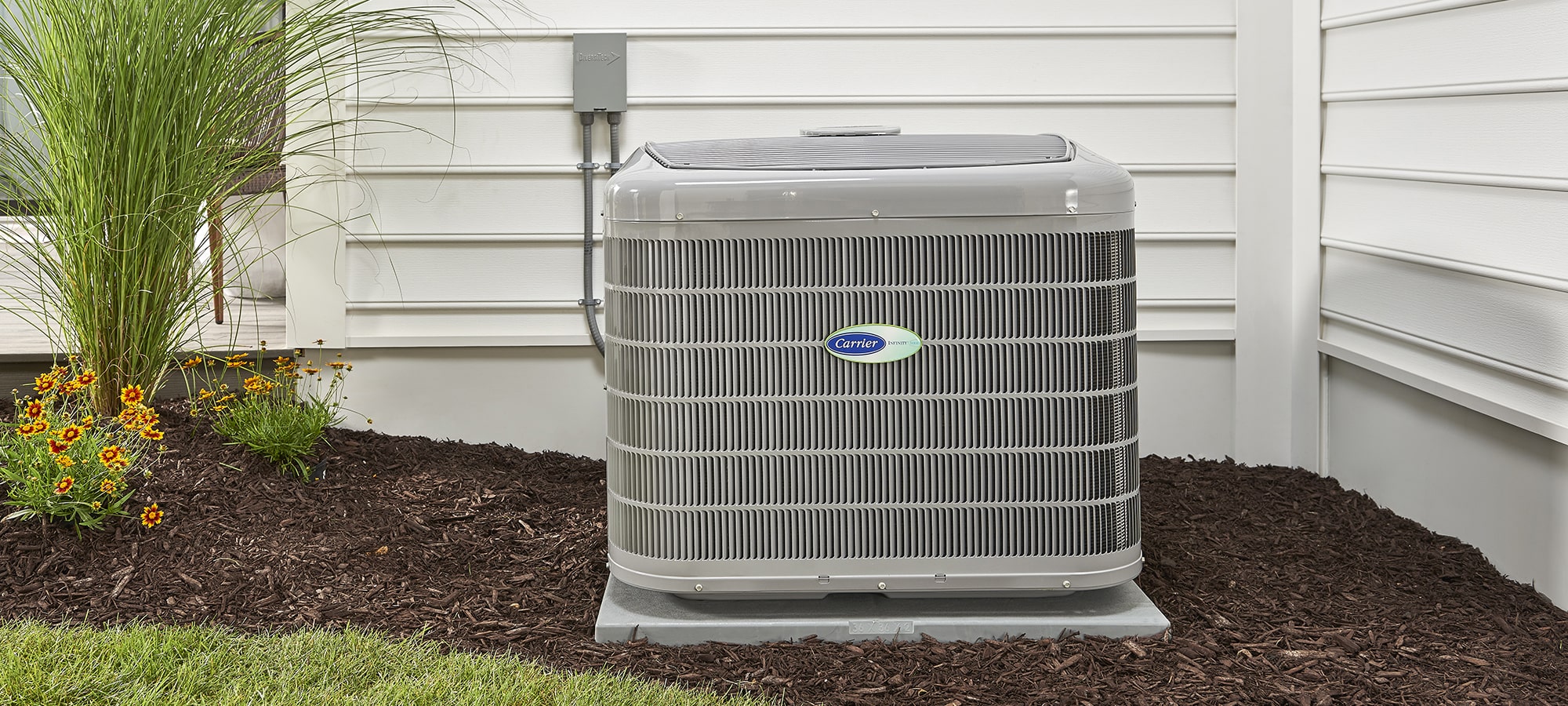
To check, look at the nameplate on the side of the outdoor unit for the refrigerant type. If it says R-22:
Small electrical repairs
Like a capacitor or contactor can still make sense.
Any refrigerant leak
Or compressor failure is almost always a replace.
Don’t mix refrigerants.
A new outdoor unit needs a matched new indoor coil, because current equipment uses R-410A or newer R-454B and R-32.
An R-22 unit is also at least 15 years old, well into the age range where replacement is due.
What to consider when replacing
Size it properly
Ask for a load calculation, not “same as the old one”. Oversized units are a common cause of sign 7.
Efficiency
New equipment is rated in SEER2. A mid-range unit suits most Ottawa homes; see our SEER2 guide.
Consider a heat pump
A ducted cold-climate heat pump ($9,000 – $18,000) cools like an AC and also heats for much of the winter, with your furnace as backup.
Check the furnace
If it is also 15+ years old, replacing both together ($8,000 – $15,000) is often cheaper than two separate jobs.
Rebates and financing
Rebates may be available, and Oria will check current programs for your home. Financing starts from $49/month on approved credit.
See our AC installation cost guide for current prices.
Get a straight answer
A good technician will show you what failed, give you the repair price and, on an older system, the replacement price, then let you decide. As Kenneth D. put it, Oria’s team is “very knowledgeable, offering creative and reasonable solutions.”
Call (613) 866-1869 or book air conditioning repair in Ottawa. Oria has served Ottawa since 2014, repairs all makes and models, and answers 24/7. If someone in your home is elderly, an infant or has a health condition, tell us when you call during a heat wave.
Frequently Asked Questions
How do I know if my AC needs repair or replacement?
Multiply the AC’s age by the repair cost. Under about $5,000, repair usually makes sense; over $5,000, replacement is usually smarter. Replace rather than repair if the unit is over 12 to 15 years old and needs a compressor, has a refrigerant leak on R-22, or has needed two or more major repairs in two summers.
How long does a central air conditioner last in Ottawa?
Most central air conditioners in Ottawa last 12 to 15 years, and well-maintained units sometimes run longer. Our cooling season is shorter than in hot southern climates, but humid 30 °C summers, winter freeze-thaw cycles and cottonwood fluff on the coil all take a toll. Yearly tune-ups and regular filter changes help a unit reach the top of that range.
Is it worth repairing an AC that uses R-22?
Only for small electrical repairs like a capacitor or contactor. R-22 has been phased out in Canada, so recharging is expensive and supply is limited. If an R-22 system has a refrigerant leak or a failed compressor, replacement is almost always the better spend. Any R-22 unit is also at least about 15 years old.
Should I turn off my AC if it is making a loud noise?
Yes, if the noise is grinding, squealing, banging or a loud buzz with the fan not turning. These usually mean failing motor bearings, a loose part or a failed capacitor, and running the AC can damage the compressor. Turn it off at the thermostat, check for debris with the power disconnected, and call a technician.
Why is my AC short cycling?
Short cycling, when an AC turns on and off every few minutes, is often caused by an oversized unit, low refrigerant, a dirty coil, a frozen coil or a thermostat placed in a bad spot. It leaves the house cool but damp and wears the compressor and contactor quickly. Change the filter, then have a technician diagnose it.
What does a burning smell from my AC mean?
A burning or hot electrical smell usually means an overheating motor, damaged wiring or a failing electrical part. Turn the AC off at the thermostat and the breaker right away and call for service. A dusty smell for a few minutes at the first start-up of the season is normal; a smell that persists or gets stronger is not.
How much does it cost to replace an AC in Ottawa?
A new central air conditioner typically costs $4,000 to $8,000 installed in Ottawa before rebates. Furnace and AC together usually run $8,000 to $15,000, and a ducted cold-climate heat pump $9,000 to $18,000. The final price depends on size, efficiency, ductwork and electrical, so get an in-home estimate. Oria gives free quotes on any equipment purchase.
Related Reading
Need help with your heating or cooling?
Family-owned, licensed HVAC contractor serving Ottawa and Gatineau since 2014. 5.0 stars from 578 Google reviews.