
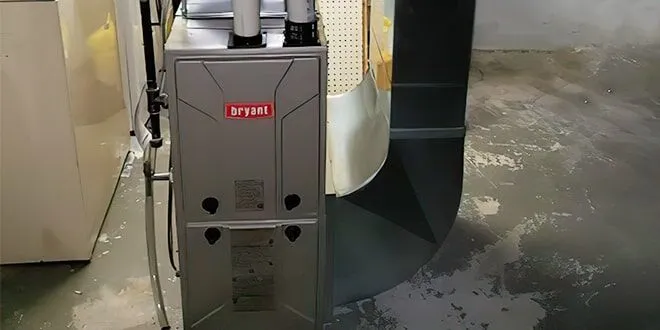
Key takeaways
A modern high-efficiency furnace runs a fixed safety sequence
Thermostat call, inducer, pressure switch, igniter, gas valve, flame sensor, blower. A failure at any step stops the furnace.
Most no-heat calls in Ottawa are small parts
A dirty flame sensor, a cracked igniter, a blocked condensate drain or a failed pressure switch.
Big-ticket parts
Are the blower motor, control board and inducer motor, typically $600 – $2,000 installed.
A cracked heat exchanger
Is a safety issue and usually means replacing the furnace.
Carbon monoxide alarms
Are required near sleeping areas in Ontario. Every gas furnace should be checked yearly by a licensed technician.

How a gas furnace works, step by step
When your thermostat calls for heat, the control board starts the inducer motor to clear the combustion chamber. The pressure switch confirms the venting is clear, and the igniter heats up.
The gas valve opens, the burners light, and the flame sensor confirms flame within seconds. Hot combustion gases pass through the heat exchangers, which warm the air without mixing with it.
After a short delay, the blower pushes house air across the heat exchangers and out through the ducts. When the thermostat is satisfied, the gas shuts off, the inducer purges the chamber, and the blower runs a little longer to pull out the last of the heat.
Controls: thermostat and control board
Thermostat
What it does: Reads room temperature and tells the furnace when to run, and on two-stage or modulating units, how hard.
Failure symptoms: furnace will not start, runs constantly, or room temperature does not match the display. Dead batteries, a loose wire or a poorly placed thermostat (near a sunny window or supply register) are common causes. See our smart thermostat installation service.
Control board (integrated furnace control)
What it does: The furnace’s brain. It runs the start-up sequence, times the blower, monitors every safety switch and flashes diagnostic codes through a small LED.
Failure symptoms: no response to the thermostat, blower running non-stop, random shutdowns, or a burnt smell near the board. Power surges and water from a leaking AC coil or condensate line are frequent causes.
Door safety switch
What it does: A small push-button switch that cuts power when the blower door is removed.
Failure symptoms: furnace completely dead even with power on. Often it is just a door that is not seated properly after a filter change.
Combustion parts: inducer, pressure switch, gas valve, igniter, burners and flame sensor
Inducer (draft inducer) motor
What it does: A small fan that pulls combustion gases through the heat exchangers and pushes them out the vent before and during each burn.
Failure symptoms: humming, rattling or squealing at start-up, then no ignition. Worn bearings are the usual cause.
Pressure switch
What it does: Confirms the inducer is creating proper draft. If the vent or condensate drain is blocked, it will not close and the gas valve will not open.
Failure symptoms: inducer runs but the furnace never lights, often with a “pressure switch open” code. In Ottawa, snow or ice blocking the PVC vents outside is a top cause in January.
Gas valve
What it does: Controls gas flow and pressure to the burners. Two-stage and modulating furnaces use valves that can open partially.
Failure symptoms: igniter glows but burners do not light, or flames are weak or uneven. Gas valve work must be done by a licensed gas technician.
Igniter (hot surface or silicon nitride)
What it does: Gets red-hot to light the gas. Older hot surface igniters are brittle silicon carbide; most new furnaces use tougher silicon nitride igniters. Very old furnaces used a standing pilot light.
Failure symptoms: furnace tries to start, clicks, then locks out after several attempts. Igniters crack with age and are one of the most common winter repairs.
Burners
What they do: Mix gas and air to produce a steady blue flame inside the heat exchanger tubes.
Failure symptoms: delayed ignition with a small “boom,” yellow or lifting flames, or soot. Dust, rust and spider webs in the burners are cleaned during a tune-up.
Flame sensor
What it does: A thin metal rod that proves a flame is present. If it does not detect flame within a few seconds, it shuts off the gas.
Failure symptoms: burners light for 3–10 seconds and then go out, over and over. A dirty sensor is the single most common no-heat call we see. Learn more in what to do if your furnace stops working on a cold day.
Heat transfer: primary and secondary heat exchangers
Primary heat exchanger
What it does: Metal tubes or clamshells where combustion happens. They get very hot and transfer heat to the air blowing across the outside, while keeping combustion gases, including carbon monoxide, separate from your household air.
Failure symptoms: cracks or holes, soot, rust, flame rollout, or a CO alarm. A cracked heat exchanger is a safety hazard and, on most furnaces, means the furnace should be replaced rather than repaired.
Secondary (condensing) heat exchanger
What it does: Found on high-efficiency furnaces (95% AFUE and up). It pulls extra heat out of the exhaust until the water vapour condenses. That is how these furnaces reach 95–98% AFUE and why they vent through PVC instead of a metal chimney.
Failure symptoms: corrosion, water leaks, or pressure switch faults when the coil is restricted. For a deeper look, see our furnace carbon monoxide safety guide.
Safety limits and venting
High limit switch
What it does: Shuts off the burners if the air around the heat exchanger gets too hot, usually because of poor airflow.
Failure symptoms: furnace runs a few minutes, shuts off, the blower keeps running, then it restarts. A clogged filter or closed registers are often to blame. Repeated limit trips stress the heat exchanger.
Flame rollout switch
What it does: Sits near the burners and trips if flames roll out of the combustion area, often because of a blocked heat exchanger or vent.
Failure symptoms: furnace locks out and will not restart until the switch is reset. A tripped rollout switch is a warning sign; do not keep resetting it. Call a technician.
Flue and venting (PVC intake and exhaust)
What it does: High-efficiency furnaces draw combustion air through one PVC pipe and exhaust through another, usually out a side wall. Older mid-efficiency furnaces vent through a metal flue into a chimney.
Failure symptoms: pressure switch faults, water dripping from the pipe, or a whistling sound. Keep outdoor vent terminations clear of snow, ice and drifts.
Condensate trap, drain and pump
What it does: High-efficiency furnaces produce several litres of water a day in cold weather. The trap and drain carry it to a floor drain, or a small pump lifts it if no drain is nearby.
Failure symptoms: water on the floor, gurgling, or a furnace that shuts off with a pressure switch code. A blocked trap or a failed condensate pump is a frequent, inexpensive fix.
Air delivery: filter, blower, ducts and add-ons
Return air and filter
What it does: Return grilles pull air back to the furnace. The filter traps dust before it reaches the blower and heat exchanger.
Failure symptoms: weak airflow, dusty house, high limit trips. Check 1-inch filters monthly in winter and replace as needed. See why changing your furnace filter matters.
Blower motor and blower wheel
What it does: Moves air through the furnace and ducts for heating, and through the AC coil in summer. Newer furnaces use ECM variable-speed motors; older ones use PSC motors.
Failure symptoms: no airflow even though the burners light, humming, squealing or a burning smell. A dirty blower wheel also cuts airflow.
Blower capacitor
What it does: Gives a PSC blower motor the electrical boost to start and keep running.
Failure symptoms: blower hums but does not spin, or starts slowly. A low-cost part when caught early.
Evaporator coil (above the furnace)
What it does: Part of your central AC or heat pump. It sits in the plenum on top of the furnace, so all heating air passes through it too.
Failure symptoms: water leaking onto the furnace in summer, poor airflow if the coil is dirty, or ice. A leaking coil drain can damage the control board below.
Supply plenum, ducts and registers
What they do: Distribute warm air to each room and bring it back through the returns.
Failure symptoms: cold rooms, noisy registers, or dust. Leaky or undersized ducts cause many comfort complaints that look like furnace problems.
Humidifier
What it does: Adds moisture to dry winter air, mounted on the supply or return ductwork.
Failure symptoms: dry air, static shocks, mineral buildup or water leaks. Pads should be replaced yearly. See furnace humidifier installation.
Furnace parts at a glance: symptoms and typical repair costs
Typical installed repair costs in Ottawa. Most common furnace repairs fall between $150 and $900; major parts such as a blower motor, control board or inducer run $600 – $2,000.
| Part | Job | Common failure symptoms | Typical repair band |
|---|---|---|---|
| Flame sensor | Proves flame | Burners light, then shut off | Common repair ($150 – $900 range, usually low end) |
| Igniter | Lights the gas | Clicks, no ignition, lockout | Common repair ($150 – $900) |
| Pressure switch | Confirms draft | Inducer runs, no ignition | Common repair ($150 – $900) |
| Condensate trap / pump | Drains water | Leaks, gurgling, shutdowns | Common repair ($150 – $900) |
| Limit / rollout switch | Overheat protection | Short cycling, lockout | Common repair ($150 – $900) |
| Blower capacitor | Starts PSC blower | Blower hums, will not spin | Common repair ($150 – $900, usually low end) |
| Gas valve | Controls gas | Igniter glows, no flame | Common repair ($150 – $900, upper end) |
| Inducer motor | Clears exhaust | Rattle or squeal at start-up | Major part ($600 – $2,000) |
| Control board | Runs the sequence | No response, erratic operation | Major part ($600 – $2,000) |
| Blower motor | Moves air | No airflow, humming, burning smell | Major part ($600 – $2,000) |
| Heat exchanger | Separates flame from air | Cracks, soot, CO alarm | Usually replace furnace ($4,500 – $8,500) |
The final price depends on the home, equipment and venting/ductwork, and Oria gives free quotes on any equipment purchase. If your furnace is 15 years or older and needs a major part, compare the repair against a new high-efficiency furnace at $4,500 – $8,500. Our furnace replacement cost guide can help.
Safety first: carbon monoxide and licensed gas work
In Ontario, gas appliance work is regulated by the TSSA and must be done by a licensed gas technician. Carbon monoxide alarms are required near sleeping areas in homes with fuel-burning appliances. Test yours monthly and replace them at the end of their rated life.
If your CO alarm sounds, get everyone outside, call 911 from outdoors, and do not go back in until the fire department says it is safe. Signs of trouble include soot around the furnace, a yellow flame, a strong smell, or headaches and nausea that ease when you leave the house.
A yearly tune-up, typically $120 – $200 per system, includes cleaning the flame sensor and burners, checking the heat exchanger, testing safety switches and measuring gas pressure and temperature rise.
Furnace acting up? Licensed gas technicians, every make and model
- Serving Ottawa since 2014
- TSSA and HRAI approved
- 5.0-star Google rating from 578 reviews
Need a furnace part diagnosed?
If your furnace is showing any of the symptoms above, our licensed technicians can find the failed part quickly and give you an upfront price before any work begins. As one customer, Phil G., wrote: “Mansoor was incredibly fast to respond, offered help over the phone and came over the following morning.”
Book furnace repair in Ottawa, or call (613) 866-1869 for 24/7 emergency service.
Frequently Asked Questions
What is the most common furnace part to fail?
In Ottawa, the most common no-heat causes are a dirty flame sensor, a cracked hot surface igniter, a blocked condensate drain and a faulty pressure switch. These are usually quick, lower-cost repairs. A yearly tune-up catches most of them before the first cold snap, when they tend to fail.
Why does my furnace light and then shut off after a few seconds?
This is the classic sign of a dirty or failing flame sensor. The burners light, but the sensor cannot prove the flame, so the control board shuts off the gas for safety. The furnace may retry several times and then lock out. A technician can clean or replace the sensor and check the grounding.
Is a cracked heat exchanger dangerous?
Yes. The heat exchanger keeps combustion gases, including carbon monoxide, out of your household air. A crack can let those gases mix with the air or cause flame rollout. When a technician confirms a crack, the furnace is usually shut down, and replacing the furnace is normally the safest and most practical option.
What does the pressure switch do on a furnace?
The pressure switch confirms that the inducer motor is creating proper draft through the vent before the gas valve opens. If the PVC vents are blocked by snow or ice, the condensate drain is plugged, or the inducer is weak, the switch stays open and the furnace will not light. It is an important safety device.
How much does it cost to replace a furnace blower motor in Ottawa?
A blower motor is one of the major furnace parts, typically $600 – $2,000 installed depending on whether it is a standard PSC or a variable-speed ECM motor and on the furnace model. The final price depends on the equipment. On an older furnace, it is worth comparing that cost against a replacement.
Why is water leaking around my furnace?
High-efficiency furnaces make condensate, so leaks usually come from a blocked condensate trap, a cracked drain line, a failed condensate pump, or the AC evaporator coil drain above the furnace. Water can damage the control board, so turn the furnace off if water is near electrical parts and call for service.
Can I replace furnace parts myself?
Changing the filter and thermostat batteries are safe DIY tasks. Anything involving gas, venting or combustion parts, such as the gas valve, burners or heat exchanger, must be done by a licensed gas technician in Ontario under TSSA rules. Wrong parts or settings can cause carbon monoxide or fire hazards.
Related Reading
Need help with your heating or cooling?
Family-owned, licensed HVAC contractor serving Ottawa and Gatineau since 2014. 5.0 stars from 578 Google reviews.