
Quick answer: start with these checks
Feel the vents
Supply air should be about 8–11 °C cooler than the air going into the return grille. Less than that points to the equipment.
Change the filter
A clogged filter is the most common cause of weak, warm airflow.
Look outside
The outdoor fan should spin and the coil should be clear of grass and cottonwood fluff.
Look for ice
On the copper line or indoor coil. If you see any, switch cooling off and run the fan to thaw it.
Only upstairs is hot?
That is usually airflow, ducts or the attic, not a broken AC.
Heat wave over 32 °C?
A correctly sized AC may run non-stop and sit a degree or two above the setpoint. That is normal.

10 causes of a hot house with the AC on
Use this table to narrow down why your house is hot with the AC on. The first five are equipment problems; the last five are about the house and the ducts.
| Cause | Sign | Fix | DIY or pro |
|---|---|---|---|
| 1. Thermostat settings or location | Fan on On, eco hold, or thermostat in afternoon sun | Cool mode, fan Auto, check schedule, shade or move thermostat | DIY; pro to relocate |
| 2. Dirty furnace filter | Weak airflow everywhere, grey filter | Replace filter, check monthly in summer | DIY |
| 3. Frozen or dirty indoor coil | Ice on lines, little airflow, water near furnace | Thaw, new filter; coil cleaning | DIY thaw; pro to clean |
| 4. Clogged outdoor coil | Matted fluff or grass on fins, long run times | Power off, rinse gently with a hose | DIY; pro for deep clean |
| 5. Low refrigerant or failing part | Lukewarm air, hissing, fan humming but not spinning | Find and fix the leak or failed capacitor/motor | Pro |
| 6. Undersized AC | Runs non-stop on 28 °C days and never catches up | Load calculation, properly sized replacement | Pro |
| 7. Oversized AC | Cool but clammy, short on-off cycles | Lower fan speed setting, or right-size at replacement | Pro |
| 8. Leaky, crushed or undersized ducts | Some rooms get weak air; hot attic or garage ducts | Seal joints, repair runs, add a return | Pro |
| 9. Upstairs heat and poor balance | Main floor 23 °C, bedrooms 27 °C | Adjust dampers, circulate fan, add returns or a ductless head | DIY first; pro for changes |
| 10. Sun, insulation and air leaks | Hot sunny rooms, hot top floor, drafts | Blinds, sealing, attic insulation and ventilation | DIY and contractor |
Equipment causes: when the AC isn’t keeping up
1. Thermostat settings or location
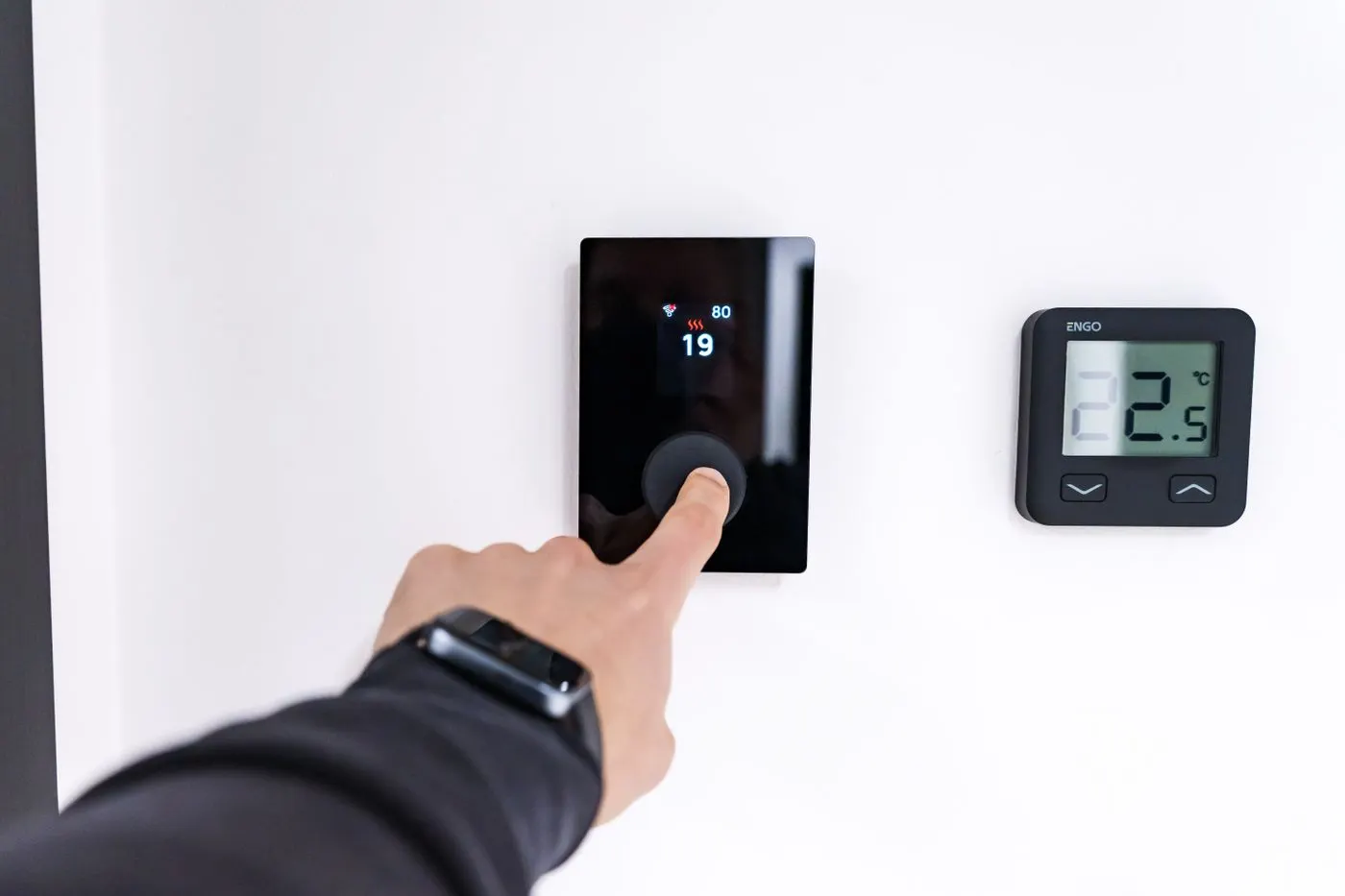
Check that the thermostat is on Cool, the fan is on Auto and no vacation hold is set. A thermostat in afternoon sun or beside a kitchen reads high and over-cools that spot while the rest of the house drifts warm.
2. Dirty furnace filter
Central AC uses the furnace blower and filter. A clogged filter cuts airflow, so less cold air reaches each room and the coil can freeze. Replace it, then check it monthly through July and August.
3. Frozen or dirty indoor coil
Ice on the coil blocks airflow. Set the thermostat to Off with the fan On for 2–4 hours to thaw it. A coil coated in dust and pet hair cools poorly even without ice and needs a technician to clean it.
4. Clogged outdoor coil
The outdoor unit has to dump your home’s heat outside. When June cottonwood fluff mats the fins, pressures climb, cooling drops and hydro use rises. Rinse it gently with the power off.
5. Low refrigerant or a failing part
An AC is sealed, so low refrigerant always means a leak. Signs include lukewarm air, ice on the lines and hissing. A weak capacitor or failing fan motor can also cut capacity. These are jobs for a licensed refrigeration technician; see our AC troubleshooting guide for the full checklist.
Is your AC the wrong size?
Sizing problems explain many “it never cools properly” homes. Most Ottawa houses need 1.5 to 4 tons of cooling, and the right number comes from a load calculation that accounts for floor area, windows, sun exposure, insulation and air leakage. Square footage alone, or the label on the old unit, is not enough.
- Undersized: the AC runs all afternoon on ordinary 28 °C days and still can’t hold the setpoint. This often shows up after a basement is finished or an addition is built without upgrading the system.
- Oversized: the house cools fast but feels damp, because short cycles don’t run long enough to pull out moisture. On a humid Ottawa day with the humidex near 40, that clammy feeling is the giveaway.
An AC also has limits. Residential systems are designed to hold roughly 24 °C indoors on a typical hot summer day. On the few days each year that run well past 32 °C, a properly sized system may run continuously and drift a degree or two higher. That is expected, not a fault.
Sizing can only be fixed at replacement. A new central air conditioner costs $4,000 – $8,000 installed in Ottawa; see our AC installation cost guide.
Why upstairs is hot in Ottawa two-storeys
One of the most common hot-weather complaints isn’t a broken AC at all. It is a two-storey home in Barrhaven, Kanata, Riverside South or Orléans where the main floor is fine and the bedrooms are 3–5 °C warmer.
Heat rises
And the roof bakes all afternoon, so the top floor carries the biggest heat load.
Long duct runs
The furnace is in the basement, so cold air reaches upstairs rooms last and weakest.
Few returns upstairs
Warm air has nowhere to go if bedrooms lack return grilles or doors stay shut.
Bonus rooms over garages
Sit above a hot space with ducts running through it.
Try first: partly close the basement supply dampers near the furnace, keep bedroom doors open or undercut them, and run the fan on circulate for an hour in the evening. If that isn’t enough, a technician can rebalance the system, add a return or recommend a single-zone ductless mini-split ($3,500 – $6,500) for the worst room.
Duct problems that leave rooms warm
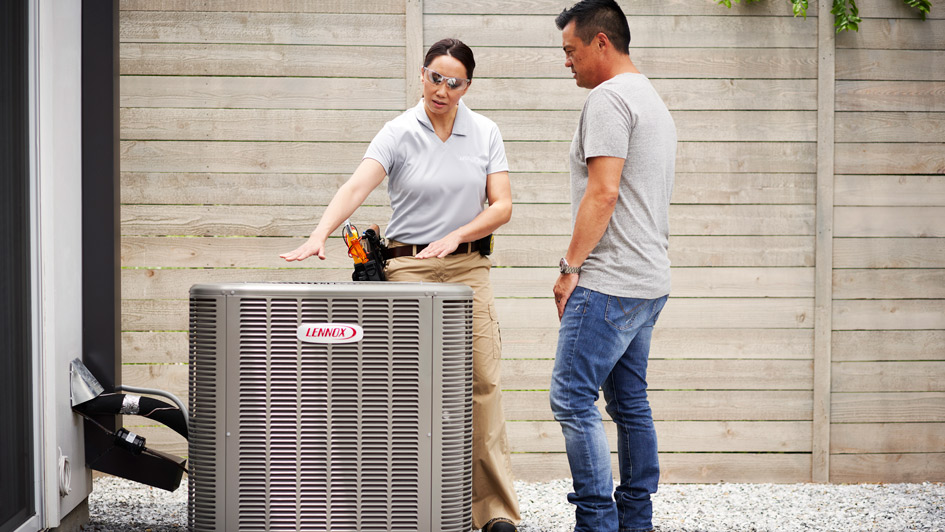
If the AC itself tests fine, the cold air may be lost on the way. Common duct problems include:
Leaky joints
Unsealed seams in the basement or attic leak cold air before it reaches the rooms.
Crushed or disconnected flex duct
Common in attics and bulkheads after renovations.
Undersized runs
Ducts sized for heating can be too small to carry enough cooling air upstairs.
Closed or blocked registers
Furniture, rugs and closed vents choke airflow.
Too little return air
The blower can’t move enough air if returns are few or small.
Sealing accessible joints with foil tape or mastic is a reasonable DIY job. Resizing, adding returns or rerouting runs needs a pro. Our ductwork service handles repairs and modifications.
House causes: sun, insulation and air leaks
Even a perfect AC struggles in a house that gains heat faster than it can be removed.
Windows
Close blinds on south and west windows by late morning. Exterior shades or awnings work best.
Attic
Thin insulation or blocked soffit vents turn the attic into an oven above the bedrooms.
Air leaks
Gaps around doors, windows and pipe penetrations let in humid outdoor air.
Indoor heat
Cooking, the dryer and old bulbs all add heat. Shift them to the evening on hot days.
Our 21 AC maintenance and home cooling tips cover these in more detail.
When to call a technician, and what it costs
Call if the temperature split at the vents is under about 8 °C, ice comes back after thawing, you hear hissing, a breaker trips twice, or rooms stay hot after the DIY fixes above. Most AC repairs in Ottawa cost $150 – $1,200, a compressor $1,800 – $3,500, and a tune-up $120 – $200. Final prices depend on the home, the equipment and the ductwork, and Oria gives free quotes on any equipment purchase.
As Phil G. said of a recent visit, Mansoor “diagnosed the problem within a few minutes.” Book air conditioning repair in Ottawa or call (613) 866-1869. Oria offers 24/7 service and same-day repair is often available.
Frequently Asked Questions
Why is my AC running but the house is still hot?
The most common reasons are a dirty filter, a frozen or dirty indoor coil, an outdoor unit clogged with debris, low refrigerant from a leak, or a failing capacitor or fan motor. If the air from your vents is less than about 8 °C cooler than the return air, the equipment likely needs service. If the air is cold but rooms stay warm, look at ducts, sun and insulation.
Why is my upstairs so hot with the AC on?
Heat rises, the roof heats the top floor all afternoon, and in most two-storey homes the upstairs registers are at the end of the longest duct runs from the basement furnace. Partly close basement dampers, keep bedroom doors open and run the fan on circulate in the evening. If that isn’t enough, rebalancing, an added return or a ductless unit can fix it.
How much cooler should my house be than outside?
A central AC isn’t designed to hit any temperature you choose. Residential systems are typically sized to hold about 24 °C indoors on a normal hot day. On a 33 °C day with high humidity, a properly sized unit may run non-stop and sit a degree or two above the setpoint. Struggling on milder days points to a problem.
Can an AC be too big for a house?
Yes. An oversized AC cools the air quickly and shuts off before it removes much moisture, so the house feels damp and clammy. It also cycles on and off more, which wears parts. A proper load calculation looks at windows, insulation, orientation and air leakage, not just square footage or the size of the old unit.
Will closing vents in unused rooms help cool the rest of the house?
Usually not much. Closing a few registers raises pressure in the ducts and can reduce total airflow, freeze the coil or make the blower work harder. A better approach is to partly close the dampers on basement duct branches in summer to push more air upstairs, keeping the winter positions marked so you can reset them.
Does a hot house mean I need a new AC?
Not necessarily. Many hot-house calls are fixed with a new filter, a coil cleaning, a capacitor or a duct repair, which fall within the typical $150 to $1,200 AC repair range. Replacement makes sense when the system is undersized, more than 12 to 15 years old, runs on R-22 or needs a compressor.
Related Reading
Need help with your heating or cooling?
Family-owned, licensed HVAC contractor serving Ottawa and Gatineau since 2014. 5.0 stars from 578 Google reviews.