
Quick answer: boiler warning signs by urgency
Boilers usually give plenty of warning before they fail. Catching the signs early means a smaller boiler repair and less risk of losing heat on a −25 °C night.
Emergency, act now
Gas smell, carbon monoxide alarm, yellow or orange flame, soot around the boiler, or water spraying from a fitting.
Book a repair within a day or two
Pressure climbing toward 30 psi, a relief valve that drips or discharges, repeated lockouts, or a zone that will not heat.
Book soon
Banging, kettling or gurgling, slow drips under the boiler, pressure that keeps dropping, or gas bills that rise year over year.
Check yourself first
Radiators that are cold only at the top, a thermostat with dead batteries, or snow covering the outdoor vent.
Boiler symptom chart: likely cause and urgency
| Symptom | Likely cause | Urgency |
|---|---|---|
| Radiators cold at the top, warm at the bottom | Air trapped in the system | Low: bleed the radiator, then check pressure |
| Radiators cold at the bottom or one area cold | Sludge or scale build-up | Medium |
| Whole zone or floor cold | Zone valve, circulator pump, thermostat or mixing valve | Medium to high in winter |
| Pressure below about 12 psi when cold | Leak, or water lost after bleeding radiators | Medium |
| Pressure near 30 psi when hot | Waterlogged expansion tank or faulty fill valve | High |
| Relief valve dripping or discharging | Over-pressure, or a worn relief valve | High |
| Kettling (rumbling like a kettle) | Scale or sludge on the heat exchanger, poor flow | Medium |
| Banging in pipes | Trapped air, water hammer or pump problems | Medium |
| Water pooling under the boiler | Leaking fitting, pump seal, relief valve or condensate line | Medium to high |
| Frequent lockouts or error codes | Ignition, flame sensing, venting or frozen condensate line | High in winter |
| Yellow or orange flame, soot | Incomplete combustion; carbon monoxide risk | Emergency |
| Gas bills rising year over year | Scale, poor combustion or an aging boiler | Low to medium |
Boiler pressure basics
Most hot water boilers have a gauge on the front or on the piping that shows pressure in psi, often together with water temperature. It is the quickest health check you can do.
Normal cold pressure
About 12–15 psi for most residential systems.
Normal hot pressure
It rises as the water heats, but should stay under about 25 psi.
Relief valve
On most residential boilers it opens at 30 psi to protect the system. If it is opening, something is wrong.
Pressure that keeps falling means water is leaving the system, usually through a leak or a relief valve that weeps. Pressure that climbs sharply when the boiler fires often points to a waterlogged expansion tank, which can no longer absorb the water’s expansion.
Some wall-hung combi boilers show pressure on a digital screen or in bar instead of psi. Check the manual for your model’s normal range, and do not top up or drain the system unless you know how.
Banging, kettling and gurgling noises
A healthy boiler is quiet, so new noises are worth noting. The sound usually tells you where to look.
Kettling
A rumbling or popping sound like a kettle boiling. Scale or sludge on the heat exchanger traps pockets of water that flash to steam. It reduces efficiency and stresses the heat exchanger.
Banging or clunking
Often trapped air or water hammer in the pipes. A worn circulator pump or a loose part inside the cabinet can also knock.
Gurgling
Air moving through the pipes, often after a pressure drop. Bleeding radiators may help, but recurring air means the system is drawing it in somewhere.
Whirring or grinding
A failing pump or fan motor.
Cold radiators and uneven heat
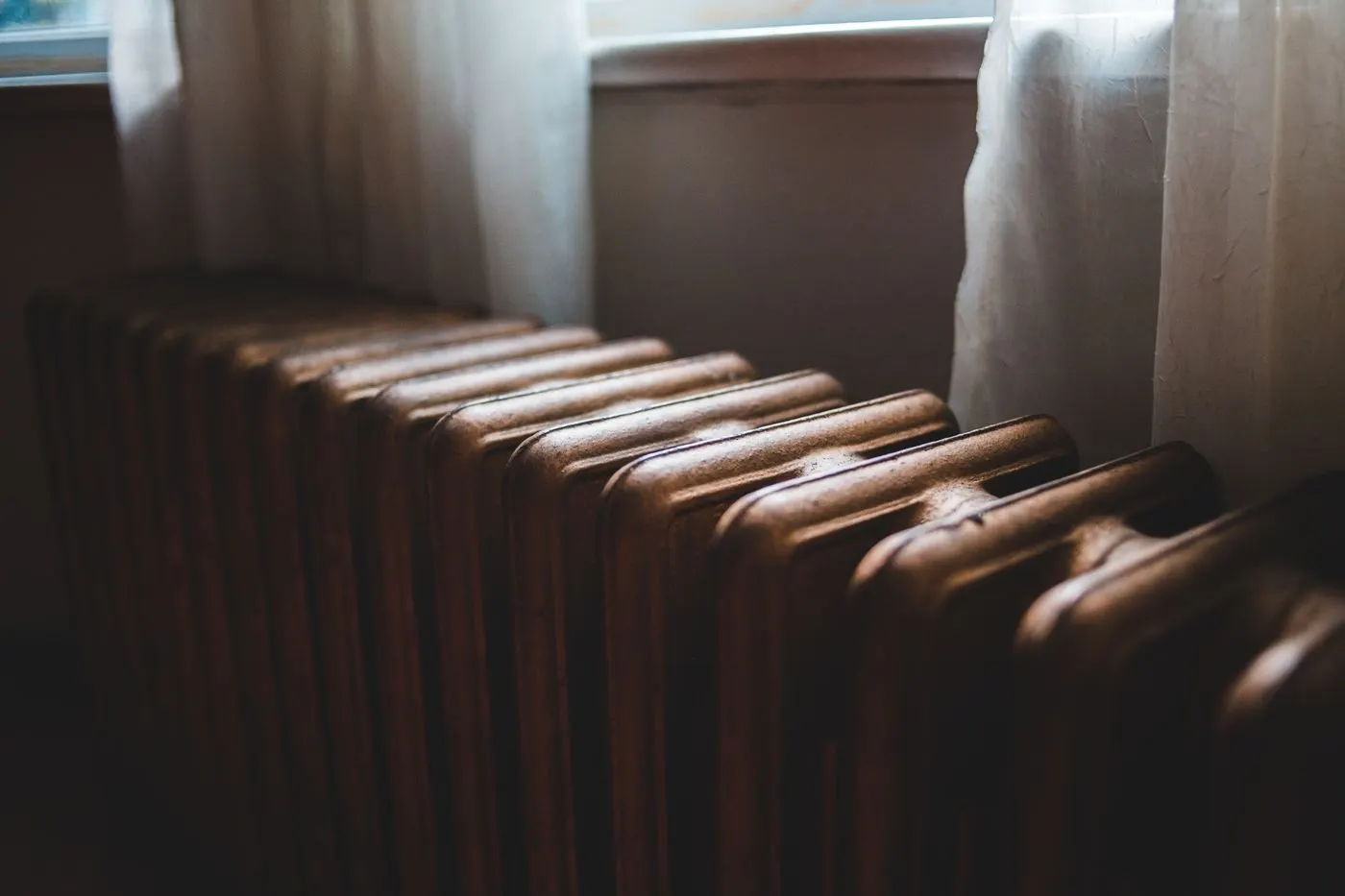
Where the cold spot is tells you a lot. A radiator that is cold at the top and warm at the bottom usually has trapped air. Bleeding it with a radiator key often fixes the problem, but check the pressure gauge afterwards because bleeding releases water.
A radiator that is cold at the bottom, or several rooms that heat poorly, points to sludge or scale restricting flow. A technician can flush the system and may recommend a filter or water treatment.
If an entire zone or floor stays cold, the cause is usually a zone valve, circulator pump or thermostat. Homes with in-floor radiant heating may also have a mixing valve that controls water temperature to the floor loops.
Leaks, drips and frozen condensate lines
Any water around a boiler deserves attention. Small drips from a pump flange or fitting can corrode parts and slowly drain the system.
Water from the relief valve’s discharge pipe is a pressure warning, not just a leak. If the valve has opened, call for service rather than capping or ignoring it.
High-efficiency condensing and combi boilers produce acidic condensate that drains through a trap and line. In Ottawa, a line routed outside or through a cold space can freeze in deep cold, which backs up the boiler and shuts it down. If your boiler locks out during a cold snap, check the condensate line and the outdoor vent for ice or snow.
Flame colour, smells and carbon monoxide
Carbon monoxide has no smell, colour or taste. That is why your home must have working CO alarms near sleeping areas whenever it has a fuel-burning appliance.
If you can see your boiler’s flame, it should be mostly blue. A lazy yellow or orange flame, soot around the burner or vent, or a burning smell points to incomplete combustion, which can produce carbon monoxide. Turn the boiler off at the thermostat and call a licensed gas technician.
Safety first: if you smell gas, leave the house right away and call Enbridge Gas’s emergency line or 911 from outside. If your CO alarm sounds, get everyone outside and call 911. Read more in our guide to carbon monoxide safety, which applies to boilers too.
Lockouts, error codes and short cycling
Modern boilers protect themselves. When the control board senses a problem with ignition, flame, venting, water flow or temperature, it locks out and usually shows an error code or flashing light.
Write the code down before resetting. One reset is fine, but a boiler that keeps locking out has a fault that resetting will not fix.
A boiler that fires and shuts off every few minutes is short cycling. Common causes are an oversized boiler, poor water flow, a faulty sensor or a thermostat in the wrong place. Short cycling wastes gas and wears out parts early.
What you can safely check before calling
- Confirm the thermostat is set to heat and above room temperature, and replace its batteries.
- Check that the boiler’s power switch and breaker are on.
- Read the pressure gauge cold and note the number.
- Bleed radiators that are cold at the top, then recheck the pressure.
- Clear snow and ice from the outdoor vent and intake on high-efficiency models.
- Look at the condensate line for kinks, ice or overflow.
- Note any error code, then reset once.
Leave the burner, gas valve, relief valve, expansion tank and electrical controls to a licensed gas technician.
Repair or replace your boiler?
Boilers often last 15 to 25 years or more. Age alone is not a reason to replace one, but age combined with repeated repairs usually is.
Repair
The boiler is under 15 years old, the problem is a pump, valve, sensor or expansion tank, and it has been reliable.
Get a replacement quote
The boiler is over 15 years old, the heat exchanger is leaking or badly scaled, parts are hard to find, or you have had several repairs in two winters.
Consider a combi boiler
Your water heater is also near the end of its life.
A boiler replacement with a high-efficiency combi or heating boiler typically costs $7,000 – $15,000 installed in Ottawa. The final price depends on the home, equipment and venting, and Oria gives free quotes on any equipment purchase. Rebates may be available; Oria will check current programs for your home. See our HVAC rebates page.
Weighing a switch to forced air? Our boiler vs furnace comparison covers the trade-offs.
The value of a yearly boiler service
A yearly service catches most of these problems before they leave you without heat. The technician cleans and inspects the burner, heat exchanger and combustion chamber, checks the flue and condensate drain, and tests the safety controls and thermostat.
Fall is the best time, before the first cold snap. Ask about our maintenance plans when you book.
Book a boiler repair in Ottawa
Oria Heating and Cooling repairs cast-iron radiator systems, radiant floors and high-efficiency combi boilers across Ottawa. Our technicians hold gas licences, and we answer heating emergencies 24/7.
Book through our boiler services, call (613) 866-1869, or use our 24/7 emergency service if your home has no heat.
Frequently Asked Questions
What should my boiler pressure be?
Most residential hot water boilers should read about 12–15 psi when the system is cold. Pressure rises as the water heats but should stay below about 25 psi. The relief valve on most residential boilers opens at 30 psi. Some combi boilers display pressure in bar or on a digital screen, so check your manual for your model’s normal range.
Why does my boiler keep losing pressure?
Falling pressure means water is leaving the system. Common causes are a slow leak at a fitting, pump or radiator valve, a relief valve that weeps, or water released when radiators were bled. A failing expansion tank can also make pressure swing. Top-ups only hide the problem, so have a technician find the leak before it damages the boiler.
Why is my boiler relief valve dripping?
A dripping relief valve usually means system pressure is reaching about 30 psi, often because the expansion tank is waterlogged or the fill valve is letting in too much water. Sometimes the valve itself is worn and leaks below its set point. Never plug or cap a relief valve. It is a safety device, so call for service.
Why does my boiler make a kettling or banging noise?
Kettling, a rumbling sound like a kettle, is usually scale or sludge on the heat exchanger causing water to flash into steam. Banging is often trapped air, water hammer or a worn circulator pump. Both reduce efficiency and can shorten the boiler’s life. A technician can flush the system, check the pump and recommend water treatment.
Why are some of my radiators cold?
A radiator cold at the top usually has trapped air and needs bleeding. One cold at the bottom, or several rooms heating poorly, suggests sludge restricting flow. If a whole zone or floor is cold, the zone valve, circulator pump or thermostat is the likely cause. After bleeding radiators, always check that boiler pressure has not dropped too low.
How often should a boiler be serviced?
Once a year, ideally in early fall before Ottawa’s heating season starts. A licensed gas technician should clean and inspect the burner and heat exchanger, check the venting and condensate drain, test the relief valve and safety controls, and confirm the pressure and expansion tank are right. Yearly service catches most problems before they cause a winter breakdown.
When should I replace my boiler instead of repairing it?
Get a replacement quote when your boiler is over 15 years old and needs a major repair, the heat exchanger is leaking or heavily scaled, parts are hard to find, or you have had several breakdowns in a couple of winters. In Ottawa, a high-efficiency or combi boiler replacement typically costs $7,000 – $15,000 installed, depending on the home and venting.
Related Reading
Need help with your heating or cooling?
Family-owned, licensed HVAC contractor serving Ottawa and Gatineau since 2014. 5.0 stars from 578 Google reviews.