

Quick answer: boiler or furnace?
Both systems can heat an Ottawa home reliably through a −30 °C cold snap. The right choice depends mostly on what your house already has.
You have ductwork
Replace the furnace with a 96–98% AFUE model. It is the lower-cost route and makes central air or a heat pump simple.
You have radiators or in-floor heating
Replace the boiler with a high-efficiency boiler or combi boiler. Adding ducts to a finished home is costly and disruptive.
You want the most even, quiet heat
A boiler wins, especially with radiant floors.
You want cooling and air filtration from one system
A furnace wins.
You want lower gas use
Either can pair with a heat pump. Furnaces take a ducted heat pump; boiler homes usually add ductless mini-splits.
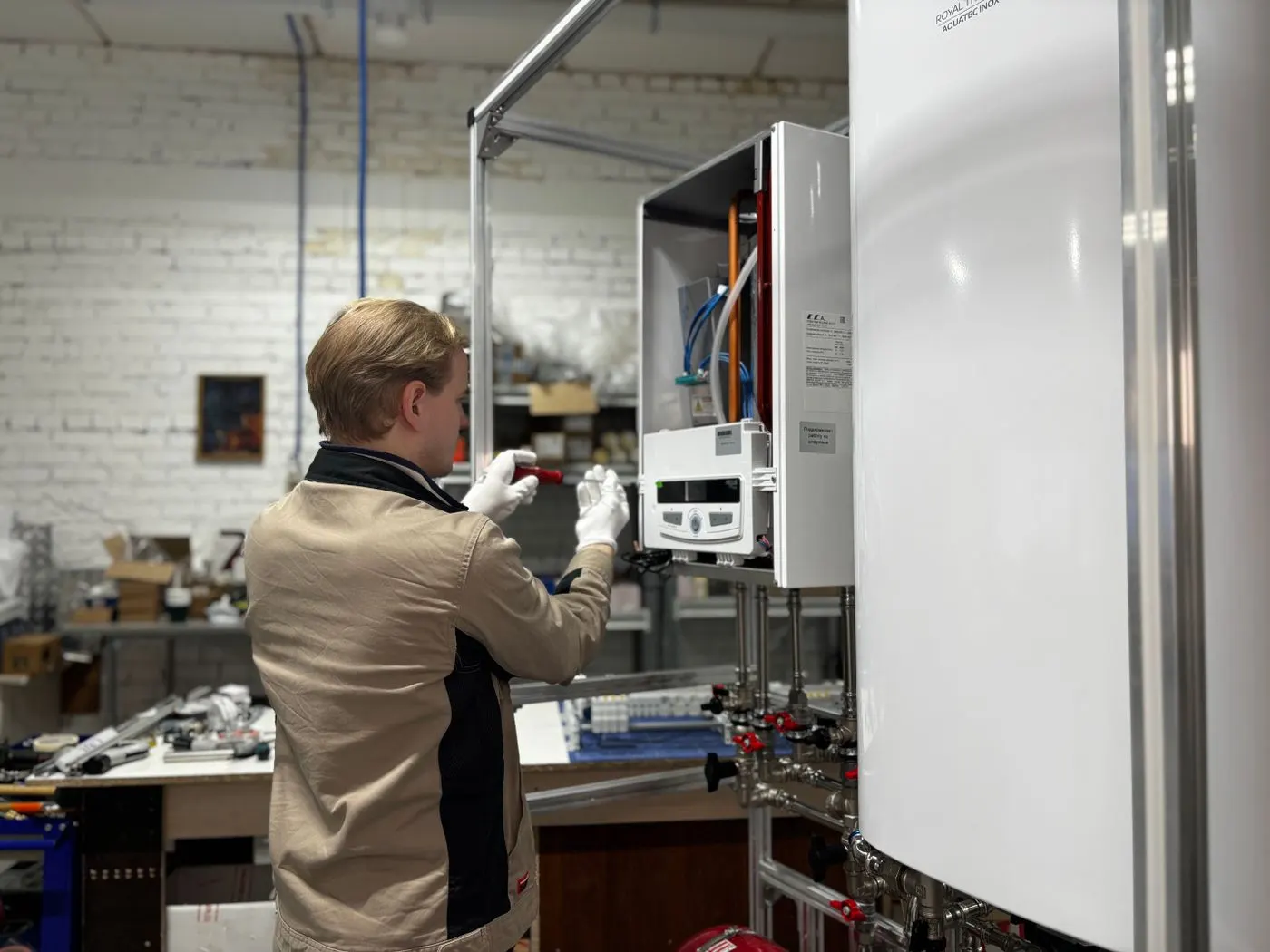
How a boiler and a furnace heat your home
A furnace heats air. Gas burners warm a heat exchanger, and a blower pushes that warm air through ducts and out of floor or wall registers.
A boiler heats water. A pump circulates hot water through pipes to cast-iron radiators, baseboard convectors or tubing under the floor, which release heat into each room.
Most Ottawa homes, especially in the suburbs, heat with forced-air furnaces. Boilers are more common in older homes in the central neighbourhoods, some custom builds, and homes with radiant floor heating.
Boiler vs furnace comparison table
| Factor | Gas furnace | Boiler |
|---|---|---|
| Comfort | Fast warm-up; air can feel drafty and dry | Even, steady radiant heat with no drafts |
| Efficiency | 95–98% AFUE for new models (95% is the Canadian minimum for new gas furnaces); some heat lost through ducts | Up to the mid-90s AFUE for condensing boilers; best results with low water temperatures |
| Typical installed cost (Ottawa) | $4,500 – $8,500; variable-speed or modulating up to ~$10,500 | $7,000 – $15,000 (high-efficiency heating or combi boiler) |
| Maintenance | Yearly tune-up plus filter changes every 1–3 months | Yearly service; check pressure, bleed radiators, no filters |
| AC compatibility | Easy: central AC or heat pump shares the ducts | No ducts, so cooling needs ductless mini-splits or a separate system |
| Air filtration | Built in through the filter; can add HRV or humidifier | None; ventilation and filtration are separate |
| Noise | Blower and air movement are audible | Very quiet in living spaces |
| Typical lifespan | 15 – 20 years | 15 – 25+ years |
Comfort: radiant heat vs forced air
Boilers deliver heat slowly and evenly. Radiators and heated floors warm the surfaces in a room, so the space feels comfortable at a slightly lower thermostat setting and there are no blasts of air.
Furnaces heat a room faster, which helps after a setback or when you come home to a cold house. The trade-off is air movement, temperature swings between cycles, and drier air in January.
A modern variable-speed or modulating furnace narrows that gap. It runs longer at low output, which evens out temperatures and reduces drafts. A furnace humidifier ($500 – $1,000 for bypass or fan-powered models) handles the dryness.
Efficiency and running costs
Both systems are rated in AFUE, the share of fuel energy that becomes heat in your home. New condensing furnaces reach 95–98% AFUE, and condensing boilers reach the mid-90s.
Real-world efficiency depends on the distribution system. Furnaces lose some heat through duct leaks, especially in unheated spaces. Condensing boilers only reach their rated efficiency when the water returning to them is cool, which suits in-floor heating and larger radiators better than small, high-temperature baseboards.
In practice, a well-installed high-efficiency furnace and a well-matched condensing boiler use similar amounts of gas in the same house. Your insulation, air sealing and thermostat habits matter more than the system type.
Installed cost in Ottawa
Furnaces are cheaper to replace than boilers. A boiler replacement involves more piping, controls, pumps and often venting changes, which adds labour.
| System | Typical installed range (CAD, before rebates) |
|---|---|
| High-efficiency gas furnace (96–98% AFUE) | $4,500 – $8,500 (variable-speed/modulating up to ~$10,500) |
| Furnace + central AC combo | $8,000 – $15,000 |
| Boiler replacement (high-efficiency combi or heating boiler) | $7,000 – $15,000 |
| Ductless mini-split for a boiler home, single zone | $3,500 – $6,500 |
| Ductless mini-split, multi-zone (2–4 heads) | $7,000 – $16,000 |
| Ducted cold-climate heat pump (with existing ducts) | $9,000 – $18,000 |
The final price depends on your home, the equipment and the venting or ductwork involved. Oria gives free quotes on any equipment purchase, and financing is available from $49/month on approved credit.
Maintenance and lifespan
Both systems need a yearly service by a licensed gas technician. That visit checks combustion, venting, safety controls and the condensate drain on high-efficiency models.
- Furnace upkeep: change or check the filter every 1–3 months, keep the outdoor intake and exhaust pipes clear of snow, and book a tune-up ($120 – $200) before winter.
- Boiler upkeep: watch the pressure gauge, bleed radiators that are cold at the top, and have the expansion tank, relief valve and pumps checked each year.
A well-maintained gas furnace typically lasts 15 to 20 years in Ottawa’s long heating season. Boilers have fewer moving parts and often last 15 to 25 years or more, although water quality and venting affect that. Once either system passes 15 years, it is worth pricing a replacement before it fails in January.
Cooling: the biggest practical difference
Ottawa summers bring 30 °C days and humidex readings of 35 to 40, so cooling matters. This is where furnaces have a clear advantage.
A furnace’s ducts and blower can carry cooled air from a central air conditioner or heat pump. Boiler homes have no ducts, so the usual answer is a ductless mini-split: a wall-mounted indoor head for each zone connected to one outdoor unit.
Mini-splits cool well, need only a small hole through the wall, and also provide efficient heat in spring and fall. For a whole house with several bedrooms, a multi-zone system is typical.
Combi boilers: heat and hot water in one unit
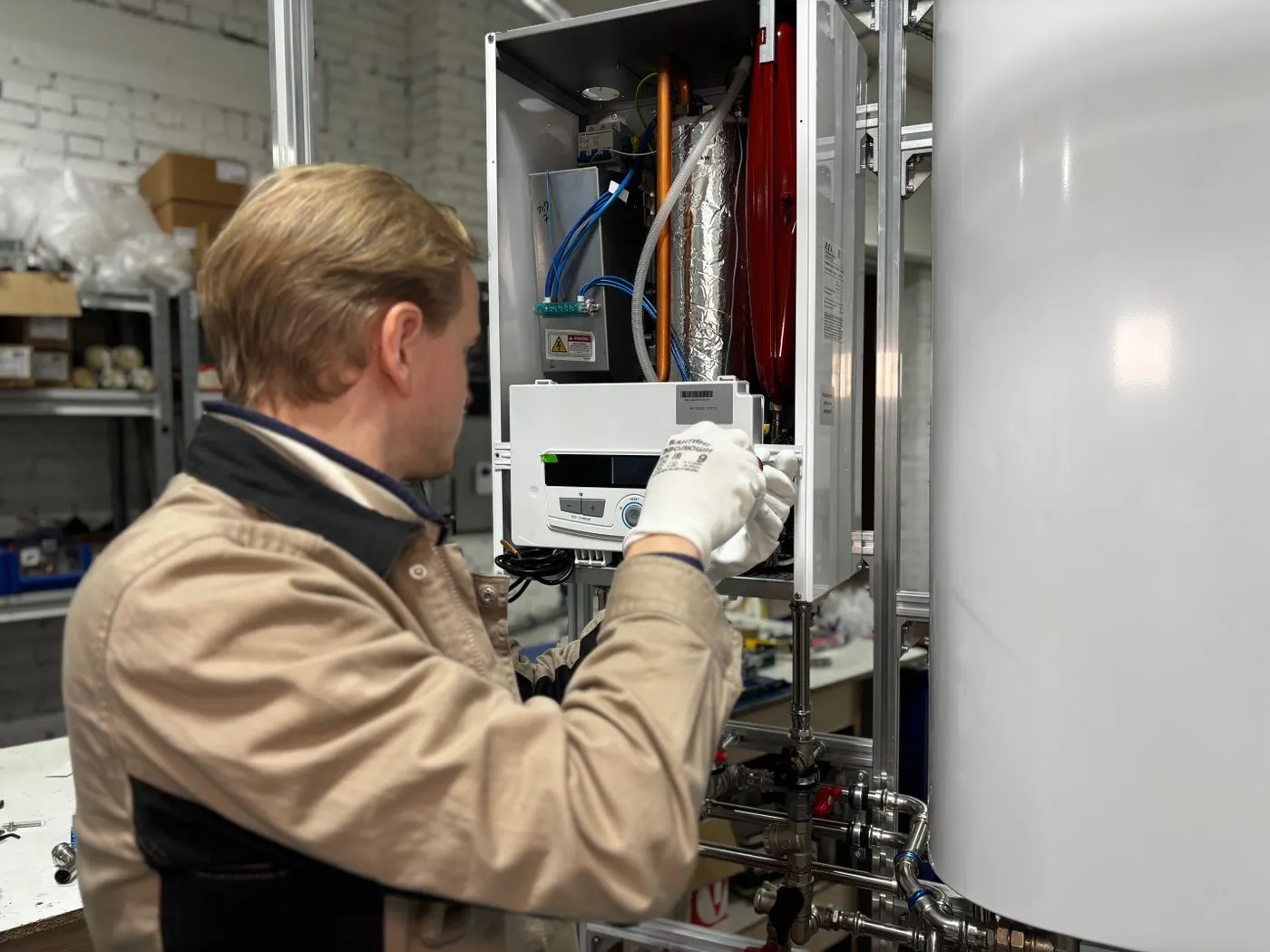
A combi boiler heats your radiators or floors and also heats domestic hot water on demand, so you no longer need a separate water tank. It is a popular upgrade when an older boiler and an aging water heater are both due.
Pros
One appliance to service, endless hot water at a steady flow, a compact wall-hung unit, and space freed in the basement.
Cons
Hot water flow is limited by the unit’s size, so two showers plus a dishwasher at once can strain a smaller model.
Best fit
Small to mid-size households with one or two bathrooms. Larger homes may do better with a heating boiler plus an indirect water tank.
Adding a heat pump to a boiler or furnace
You do not have to give up gas heat to use a heat pump. Pairing the two lets the heat pump handle mild and moderate weather while gas covers the coldest nights.
- Furnace homes: a ducted cold-climate heat pump replaces the air conditioner and shares the furnace’s ducts. This dual-fuel setup switches to the furnace automatically in deep cold.
- Boiler homes: ductless mini-splits add cooling and efficient shoulder-season heat, while the boiler keeps radiators or floors warm in January.
Rebates may be available for heat pumps and high-efficiency equipment. Oria will check current programs for your home; see our HVAC rebates page.
Who should choose which
Choose a furnace if
- Your home already has ductwork in good condition.
- You want central air or a ducted heat pump on the same system.
- Someone in the house has allergies and you want whole-home filtration.
- Up-front cost is your main concern.
Choose a boiler if
- Your home has radiators, baseboard convectors or in-floor heating.
- You value quiet, draft-free, even heat.
- You want to combine heating and hot water in a combi boiler.
- You are building or renovating and planning radiant floors.
Should you switch from a boiler to a furnace?
Usually not. Converting a boiler home to forced air means running supply and return ducts through finished walls and ceilings, which adds major cost on top of the furnace itself.
Switching from a furnace to a boiler is even less common, because you lose your cooling path. Replacing like for like and adding a heat pump or mini-splits gives most of the benefit for far less disruption.
Get advice for your home
Oria Heating and Cooling has installed and repaired heating systems in Ottawa homes since 2014. Our licensed gas technicians work on furnaces, boilers and combi boilers of every make.
Explore our boiler services or furnace installation, or call (613) 866-1869 for a free quote on a new system.
Frequently Asked Questions
Is a boiler more efficient than a furnace?
Not by much in practice. New gas furnaces are rated 95–98% AFUE and condensing boilers reach the mid-90s. Boilers avoid duct losses, but condensing boilers only hit their rated efficiency with cool return water, which suits in-floor heating and large radiators. In the same Ottawa house, a well-installed version of either uses a similar amount of gas.
Is it cheaper to replace a boiler or a furnace in Ottawa?
A furnace is cheaper. A high-efficiency gas furnace typically costs $4,500 – $8,500 installed in Ottawa, or up to about $10,500 for variable-speed and modulating models. A boiler replacement typically runs $7,000 – $15,000 because of the extra piping, pumps and controls. Final prices depend on the home, equipment and venting.
Can you add air conditioning to a house with a boiler?
Yes. The most common option is a ductless mini-split, which uses wall-mounted indoor heads connected to an outdoor unit, so no ducts are needed. A single zone typically costs $3,500 – $6,500 in Ottawa and a multi-zone system with 2–4 heads $7,000 – $16,000. Mini-splits also provide efficient heat in spring and fall.
How long does a boiler last compared to a furnace?
A well-maintained gas furnace typically lasts 15 to 20 years in Ottawa, where it runs from fall to spring. Boilers have fewer moving parts and often last 15 to 25 years or more. Water quality, venting and yearly servicing have a big effect on both, so an older system with regular maintenance can outlast a neglected newer one.
What is a combi boiler?
A combi boiler is a single wall-hung unit that heats your home’s radiators or floors and also heats domestic hot water on demand, so no separate water tank is needed. It saves space and means one appliance to maintain. Its hot water flow is limited by its size, so it suits homes with one or two bathrooms best.
Can I convert my boiler system to a furnace?
You can, but it is rarely worth it. Converting means installing supply and return ductwork throughout the house, often through finished walls and ceilings, on top of the cost of the furnace. Most boiler homes are better served by replacing the boiler with a high-efficiency or combi model and adding ductless mini-splits for cooling.
Related Reading
Need help with your heating or cooling?
Family-owned, licensed HVAC contractor serving Ottawa and Gatineau since 2014. 5.0 stars from 578 Google reviews.