
Quick answer: which is better for you?
You have natural gas and a furnace under 10 years old
Add a ducted cold-climate heat pump in place of your AC and keep the furnace as backup.
You have natural gas and an old furnace and AC
Replace both with a hybrid (dual-fuel) system, or a high-efficiency furnace plus AC if budget is tight.
You heat with propane, oil or electric baseboards
A heat pump usually cuts operating costs the most. Keep a backup heat source for −25 °C nights.
You live in Gatineau on Hydro-Québec
Low electricity rates make heat pumps especially attractive; many homes add one alongside baseboards.
You want the lowest up-front price for reliable heat
A 96–98% AFUE gas furnace is still the cheapest proven way to heat a gas-connected Ottawa home through January.
How each system makes heat
A gas furnace burns natural gas (or propane) in a burner, passes the hot combustion gases through a sealed heat exchanger, and blows house air across it. Modern condensing furnaces are 95–98% efficient, and federal rules in Canada require at least 95% AFUE for new gas furnaces. Heat output is the same at −30 °C as it is at 0 °C.
A heat pump does not burn anything. It uses electricity to move heat from the outdoor air into your home, the same way your AC moves heat out in summer. Because it moves heat instead of making it, it can deliver two to three or more units of heat for every unit of electricity in mild weather. As the outdoor temperature drops, both its efficiency and its heating capacity drop too.
That last point is the whole Ottawa debate. Our design temperature is about −25 °C, and we regularly see −25 °C to −30 °C. A modern cold-climate heat pump still works at those temperatures, but it may not carry the whole house alone, so it needs a backup. For more detail, read do heat pumps work in Ottawa winters?
Gas furnace vs heat pump: side-by-side comparison
| Factor | High-efficiency gas furnace | Ducted cold-climate heat pump |
|---|---|---|
| Typical installed cost (Ottawa) | $4,500 – $8,500 (modulating up to ~$10,500) | $9,000 – $18,000 with existing ducts |
| Provides cooling? | No (needs a separate AC) | Yes, replaces your AC |
| Performance at −25 °C | Full output, unaffected by cold | Reduced output; backup needed on coldest nights |
| Efficiency rating | AFUE 95–98% | HSPF2 and COP; well above 100% in mild weather |
| Fuel | Natural gas (Enbridge) or propane | Electricity (Hydro Ottawa, Hydro One, Hydro-Québec) |
| Operating cost | Low where gas is available | Low to moderate; lowest vs propane, oil or baseboards |
| Typical lifespan | 15 – 20+ years | 12 – 18 years (runs year-round) |
| Maintenance | Annual tune-up, $120 – $200 | Annual tune-up, $120 – $200; keep outdoor unit clear of snow |
| On-site emissions | Burns fuel; needs venting and CO alarms | None on site |
| Rebate potential | Limited | More often eligible for programs |
Prices are typical Ottawa installed ranges before rebates, not quotes. Your final price depends on the home, the equipment and the venting and ductwork involved. Oria gives free quotes on any equipment purchase.
The hybrid option: heat pump plus gas furnace (dual fuel)
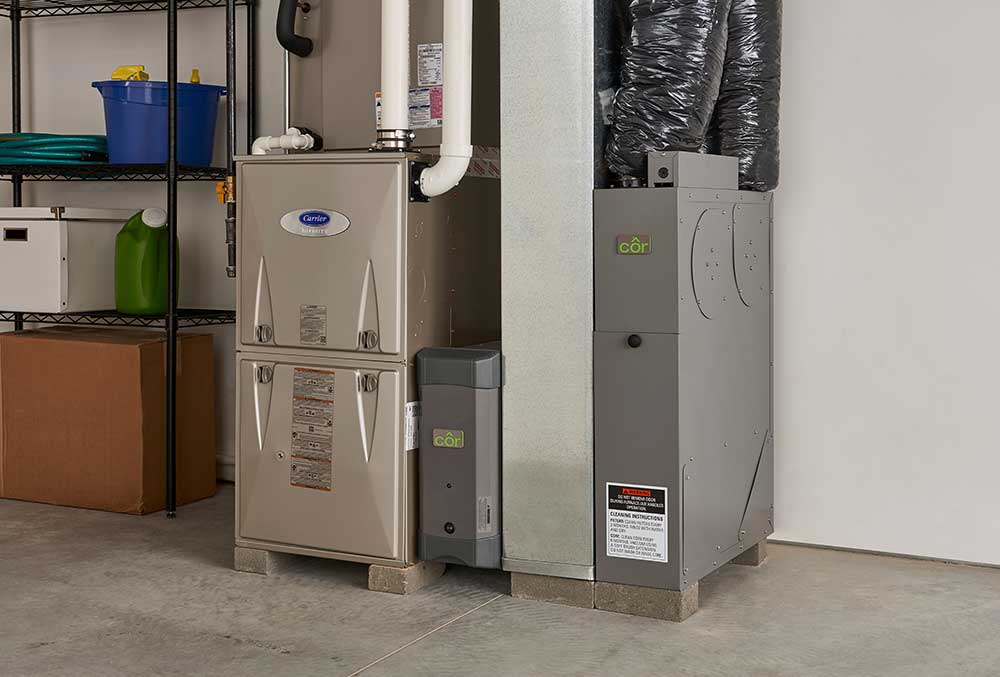
A hybrid or dual-fuel system pairs an outdoor cold-climate heat pump with an indoor gas furnace on the same ductwork. A compatible thermostat decides which one runs based on outdoor temperature and, on some systems, cost settings.
Spring, summer and fall
The heat pump cools in summer and handles shoulder-season heating.
Most of winter
The heat pump keeps running down to a set “balance point,” often somewhere between −10 °C and −20 °C depending on the equipment and your home.
Coldest nights
The furnace takes over and delivers full heat no matter how cold it gets.
For an Ottawa home that already has gas, this is usually the strongest combination. You keep the reliability of gas heat during a January cold snap, burn much less gas over the year, and replace your air conditioner with a unit that does double duty. If your furnace is recent, you only need to add the heat pump, which costs about what a premium AC upgrade costs plus the heat pump premium.
Lennox, Goodman and other major brands all make dual-fuel-capable furnaces and matching cold-climate heat pumps. Oria is a Lennox authorized dealer and also installs Goodman and all major brands.
Operating costs: what actually decides the bill
We are not going to quote a single “heat pump saves $X” number, because the answer depends on rates that change and on your home. These are the factors that decide which system is cheaper to run where you live.
Natural gas homes (most of urban Ottawa)
Natural gas from Enbridge has generally been an inexpensive heating fuel in Ontario. A 96–98% furnace turns nearly all of it into heat. A heat pump competes well in mild and moderate weather, when it is at its most efficient, and less well in deep cold. That is exactly why a hybrid system, using each where it is cheapest, tends to have the lowest total cost.
Propane and oil homes (rural Ottawa)
Many homes in Greely, Osgoode, Carp, Richmond, Kemptville and the Manotick fringe have no gas line. Propane and heating oil prices swing with the market, have to be delivered, and often arrive as one large bill when the tank is filled. Electricity, by contrast, is billed monthly and can be budgeted more evenly.
For these homes, a cold-climate heat pump usually brings the biggest drop in heating cost. Keeping the existing propane or oil furnace as backup, or adding electric backup heat, covers the coldest nights. A propane furnace upgrade remains an option if you prefer combustion heat.
Electric baseboard homes (and Gatineau)
Baseboard heaters turn one unit of electricity into one unit of heat. A heat pump turns the same electricity into two or three units much of the winter, so the savings are large. In Gatineau, Hydro-Québec’s low electricity rates already make electric heat common, and a ducted heat pump or ductless mini-split cuts that use further while adding air conditioning. Oria holds the licences required to work in Gatineau.
Your house matters as much as the equipment
Insulation in the attic and basement walls, sealed windows and doors, and a sensible thermostat setting lower the bill on any system. A leaky house makes a heat pump hand off to backup heat sooner. Our guide to saving on utility bills covers the low-cost fixes.
Upfront costs and rebates
| Option | Typical installed range (CAD) |
|---|---|
| High-efficiency gas furnace (96–98% AFUE) | $4,500 – $8,500; modulating up to ~$10,500 |
| Furnace + central AC combo | $8,000 – $15,000 |
| Ducted cold-climate heat pump (existing ducts) | $9,000 – $18,000 |
| Ductless mini-split, single zone | $3,500 – $6,500 |
| Ductless mini-split, multi-zone (2–4 heads) | $7,000 – $16,000 |
Heat pumps cost more up front, but rebates may be available through programs such as Ontario’s Home Renovation Savings Program. Eligibility often depends on your current fuel, the equipment model and approval before installation, and amounts change. Oria will check current programs for your home; see our HVAC rebates page. Financing is available from $49/month on approved credit through our financing options.
For detailed numbers on each path, see our heat pump cost guide and furnace replacement cost guide.
Lifespan, maintenance and reliability
A well-maintained gas furnace commonly lasts 15 to 20 years or more, because it only runs in heating season. A heat pump works year-round, heating in winter and cooling in summer, so 12 to 18 years is a realistic range. In a hybrid system, the furnace runs fewer hours and may last longer than it would on its own.
Both need an annual tune-up ($120 – $200 per system). Furnaces need burner, flame sensor, venting and heat exchanger checks plus working carbon monoxide alarms near sleeping areas. Heat pumps need coil cleaning, refrigerant and defrost checks, and an outdoor unit kept clear of snow and ice, ideally on a raised stand or wall bracket.
Our recommendation for Ottawa homes
If your home has gas, a hybrid system is the most balanced choice for comfort, operating cost and winter reliability. If budget is the priority, a 96–98% AFUE furnace with a good central AC is still a sound, proven setup. If you are off the gas grid, a cold-climate heat pump with backup heat usually offers the biggest improvement.
Oria has served Ottawa since 2014 and installs furnaces, heat pumps and hybrid systems from Lennox, Goodman and all major brands. Book a free in-home quote through our heat pump installation page or call (613) 866-1869.
Frequently Asked Questions
Can a heat pump heat my Ottawa home by itself?
A properly sized cold-climate heat pump can carry many Ottawa homes through most of the winter, and some well-insulated homes almost all of it. On −25 °C to −30 °C nights, output and efficiency drop, so a backup is recommended. That backup is usually your existing gas furnace in a hybrid setup, or electric resistance heat in homes without gas.
Is a gas furnace or heat pump cheaper to run in Ottawa?
It depends on your fuel. In gas-connected homes, a high-efficiency furnace is inexpensive to run, and a heat pump is most competitive in mild and moderate weather, which is why hybrid systems often have the lowest total cost. In homes heated with propane, oil or electric baseboards, a heat pump usually costs noticeably less to run.
What is a hybrid or dual-fuel heating system?
A hybrid system pairs an outdoor heat pump with an indoor gas furnace on the same ducts. The heat pump cools in summer and heats through most of the year. When it gets too cold for the heat pump to work efficiently, the thermostat switches to the furnace. You get gas reliability on the coldest nights and much lower gas use overall.
How long does a heat pump last compared with a furnace?
A gas furnace commonly lasts 15 to 20 years or more because it runs only in heating season. A heat pump runs year-round for both heating and cooling, so 12 to 18 years is a realistic range in Ottawa. Annual maintenance, clean filters and keeping the outdoor unit clear of snow help both reach the long end.
Should I replace my furnace with a heat pump if my furnace is still new?
Usually not. If your furnace is under about 10 years old and working well, the smarter move is to add a cold-climate heat pump when your air conditioner needs replacing and keep the furnace as backup. That gives you most of the heat pump’s benefits without throwing away a furnace with years of life left.
Are there rebates for heat pumps in Ottawa?
Rebates for heat pumps may be available through programs such as Ontario’s Home Renovation Savings Program, and they are generally more available for heat pumps than for gas furnaces. Eligibility can depend on your current heating fuel, the equipment model and pre-approval rules, and amounts change. Oria will check current programs for your home before you commit.
Is a heat pump a good idea for a propane or oil-heated home near Ottawa?
Yes, in most cases. Rural homes in areas like Greely, Carp, Richmond and Kemptville that heat with propane or oil usually see the biggest drop in heating costs with a cold-climate heat pump. Propane and oil prices fluctuate and arrive as large delivery bills. Keeping the existing furnace as backup covers the coldest nights.
Related Reading
Need help with your heating or cooling?
Family-owned, licensed HVAC contractor serving Ottawa and Gatineau since 2014. 5.0 stars from 578 Google reviews.