
Quick answer: furnace lifespan
How long does a furnace last? Here is the short version for Ottawa homeowners.
Typical lifespan
15–20 years for a gas furnace. Some well-maintained units go longer, and neglected ones can fail before 15.
Ottawa factor
Long heating seasons mean more run hours per year than furnaces in milder climates.
Biggest life-shorteners
Skipped maintenance, dirty filters, oversizing, poor installation and restricted ductwork.
End-of-life signs
Frequent repairs, rising gas use, uneven heat, new noises, and any sign of a cracked heat exchanger.
Plan ahead
Once your furnace passes 15 years, get a replacement price before a January breakdown forces a rushed decision.
How long heating and cooling equipment typically lasts
Furnaces usually sit alongside other equipment that ages at a different pace. These are typical service lives for well-maintained systems; real results vary with use, installation quality and care.
| Equipment | Typical lifespan | Notes for Ottawa homes |
|---|---|---|
| High-efficiency gas furnace | 15 – 20 years | Long heating season adds run hours; yearly service matters |
| Boiler | 15 – 25+ years | Water quality and venting affect life |
| Central air conditioner | 12 – 17 years | Often replaced with the furnace to keep the system matched |
| Heat pump | 12 – 17 years | Runs year-round for heating and cooling, so more hours than an AC |
| Gas tank water heater | 8 – 12 years | Hard water and sediment shorten life |
If your furnace and air conditioner are about the same age, it is worth pricing them together. Our furnace replacement cost guide lists the typical ranges.
Why Ottawa furnaces work harder
A furnace’s life is really measured in run hours and start-ups, not calendar years. Ottawa’s heating season typically runs from October into April, and January cold snaps of −25 °C to −30 °C keep a furnace running for long stretches.
That means an Ottawa furnace can rack up far more hours each year than the same model in a milder city. It is one reason yearly maintenance matters so much here.
Snow is another local factor. High-efficiency furnaces vent through PVC pipes on an outside wall, and heavy snowfall can bury them. During a big storm, check that the exhaust and intake pipes are clear every couple of hours.
What shortens or extends a furnace’s life
Maintenance
A yearly tune-up catches small problems before they damage bigger parts. The technician cleans the flame sensor and burners, checks the ignitor, tests safety switches and inspects the heat exchanger for cracks.
Skipping maintenance is the most common reason we see furnaces fail early. In two furnace replacements we handled, the old furnace failed because nobody had been checking on it. A water line then burst, and the homeowners ended up paying for a new furnace, a new water line, new flooring and a new drywall ceiling.
Filters and airflow
A clogged filter makes the blower work harder and lets the heat exchanger run hotter than it should. Over years, that heat stress is a leading cause of cracks. Read why changing your furnace filter matters for the details.
Sizing
An oversized furnace heats the house quickly, shuts off, then starts again soon after. These short cycles wear out ignitors, motors and controls faster. Sizing should come from a heat-loss calculation, not from the size of the old furnace.
Installation quality
Gas pressure, venting, temperature rise across the heat exchanger and duct static pressure all need to be set correctly at installation. A furnace installed with poor venting or restricted ducts can be stressed every time it runs.
Parts that wear out as a furnace ages
A furnace rarely dies all at once. Usually individual parts fail first, and the cost of those repairs is what tips the decision toward replacement.
Hot surface ignitor
A wear item that lights the burners. It is a common and fairly inexpensive repair.
Flame sensor
Confirms the burners are lit. When dirty, the furnace lights and then shuts off within seconds.
Inducer motor
Pulls combustion gases through the heat exchanger and out the vent.
Pressure switch
Confirms the inducer is clearing combustion gases from the heat exchanger by sensing the pressure difference it creates. If the vent is blocked by snow or the switch fails, the furnace won’t fire.
Blower motor and control board
Larger repairs, typically $600 – $2,000 for major parts.
Heat exchanger
The part that separates flame from your home’s air. A crack usually means the end of the furnace.
Most common furnace repairs fall between $150 and $900. For a tour of how these parts fit together, see our furnace anatomy guide.

Signs your furnace is nearing the end
It is 15 years or older.
Age alone is not a reason to replace, but it changes the math on every repair.
Repairs are becoming routine.
Two or more service calls in a season is a pattern, not bad luck.
Your gas use is climbing.
Compare winter bills year to year, allowing for colder or milder winters.
Rooms heat unevenly
Or the furnace runs constantly on cold days without reaching the set temperature.
New noises
Banging at start-up, rumbling after the burners shut off, or grinding from the blower. See what furnace noises mean.
Burner flames look yellow or lazy
Instead of crisp blue, or you see soot around the furnace.
Your CO alarm sounds
Or a technician finds a cracked heat exchanger. Leave the house and call for help in that case.
Our post on signs you need to upgrade your furnace covers more examples.
How to tell how old your furnace is
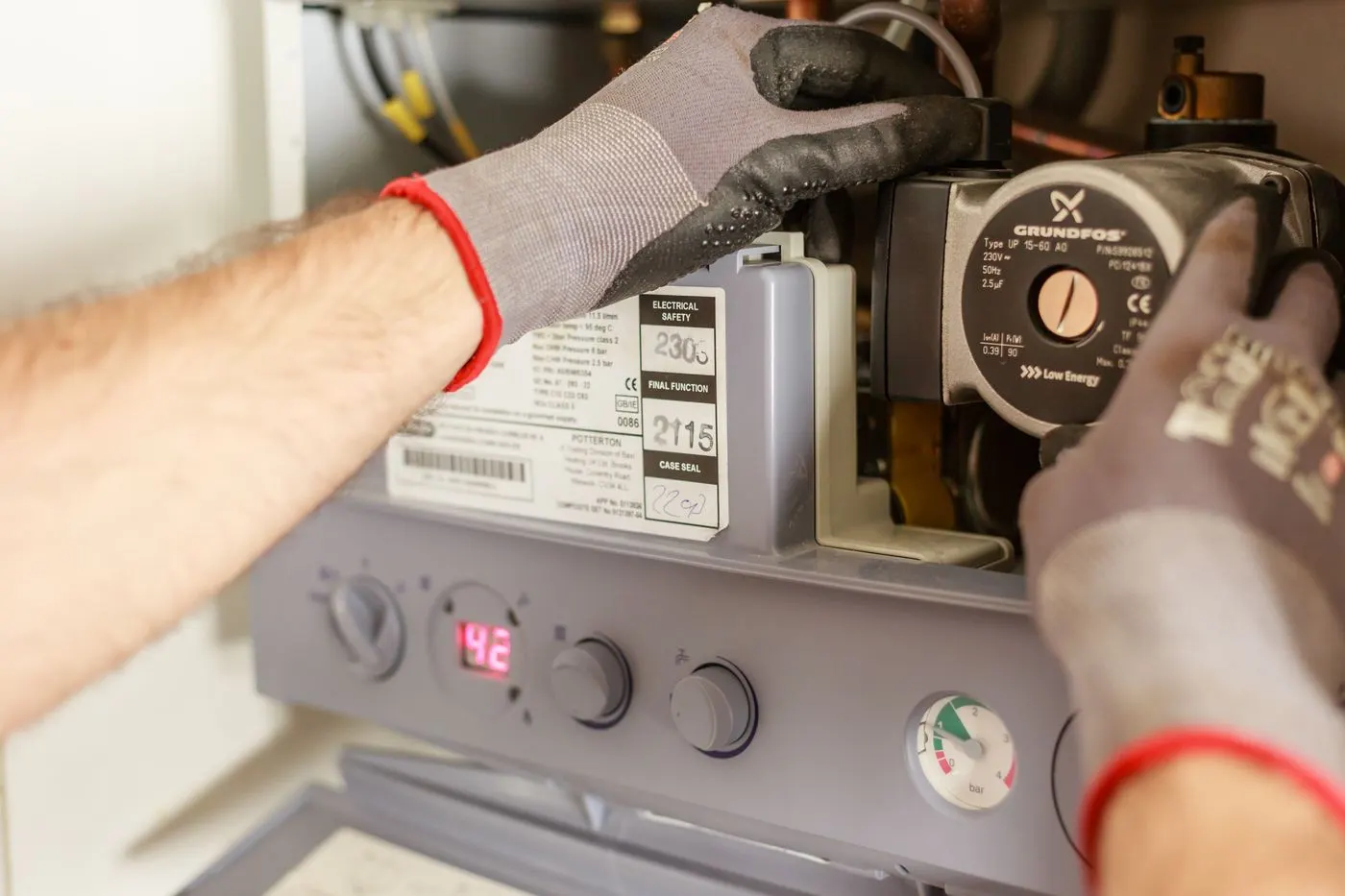
Turn off the power, remove the front panel and find the rating plate, a metal or foil label inside the cabinet. It lists the model and serial number.
Many manufacturers encode the year and month in the serial number. If you can’t decode it, a technician can, or you can look for an installation sticker or the original paperwork.
Repair or replace an older furnace?
| Furnace age | Repair needed | Usual recommendation |
|---|---|---|
| Under 10 years | Most repairs | Repair |
| 10 – 15 years | Minor part ($150 – $900) | Repair, and start budgeting |
| 10 – 15 years | Major part ($600 – $2,000) | Compare the repair against a new furnace |
| 15+ years | Any major repair | Replace in most cases |
| Any age | Cracked heat exchanger | Replace |
A new high-efficiency furnace typically costs $4,500 to $8,500 installed in Ottawa, before rebates. Financing is available from $49 per month on approved credit.
Get an honest assessment
If your furnace is getting older, a technician can tell you whether it has years left or is nearing the end. Oria has served Ottawa since 2005, and our technicians repair all makes and models.
Book a visit through our furnace repair service, or call (613) 866-1869 for a free estimate on a new furnace.
Frequently Asked Questions
How long does a gas furnace last in Ottawa?
Most gas furnaces in Ottawa last 15 to 20 years. Our long heating season, often October to April with cold snaps down to −25 °C or lower, adds run hours, so maintenance has a big effect on lifespan. A furnace that gets a yearly tune-up and regular filter changes is far more likely to reach 20 years than one that is ignored until it breaks.
Should I replace a 20-year-old furnace that still works?
Not necessarily right away, but you should plan for it. A 20-year-old furnace is past its typical lifespan, and a breakdown in January could leave you without heat. Have it inspected, especially the heat exchanger, and get a replacement quote so you can choose equipment calmly. Replacing on your own schedule usually costs less stress than replacing in an emergency.
What is the most common reason a furnace fails early?
Lack of maintenance and poor airflow are the most common causes. A dirty filter or restricted ducts make the furnace run hotter and the blower work harder, which stresses the heat exchanger and motors. Oversizing is another cause, because short cycles wear out ignitors and controls. A yearly tune-up and filter changes every one to three months prevent most early failures.
Can a furnace last 30 years?
Some do, particularly older, simpler models. But a furnace that old is likely far less efficient than today’s 95%+ AFUE minimum and more likely to develop safety problems such as a cracked heat exchanger. If your furnace is approaching 25 or 30 years, have it inspected each year, keep working carbon monoxide alarms near sleeping areas, and budget for replacement.
Does a cracked heat exchanger mean I need a new furnace?
In almost every case, yes. The heat exchanger keeps combustion gases, including carbon monoxide, separate from the air circulating in your home. A crack can let those gases mix in, and the part is rarely worth replacing on its own. If a technician finds a crack, the furnace should be shut off until it is replaced. Yearly maintenance helps catch cracks early.
How can I make my furnace last longer?
Book a professional tune-up every fall, check the filter monthly and replace it every one to three months, keep supply and return vents open, and keep outdoor vent pipes clear of snow and ice. Make sure the furnace was sized with a heat-loss calculation. A smart thermostat with low-temperature alerts can also warn you early if the furnace stops while you are away.
Related Reading
Need help with your heating or cooling?
Family-owned, licensed HVAC contractor serving Ottawa and Gatineau since 2005. 5.0 stars from 396 Google reviews.