
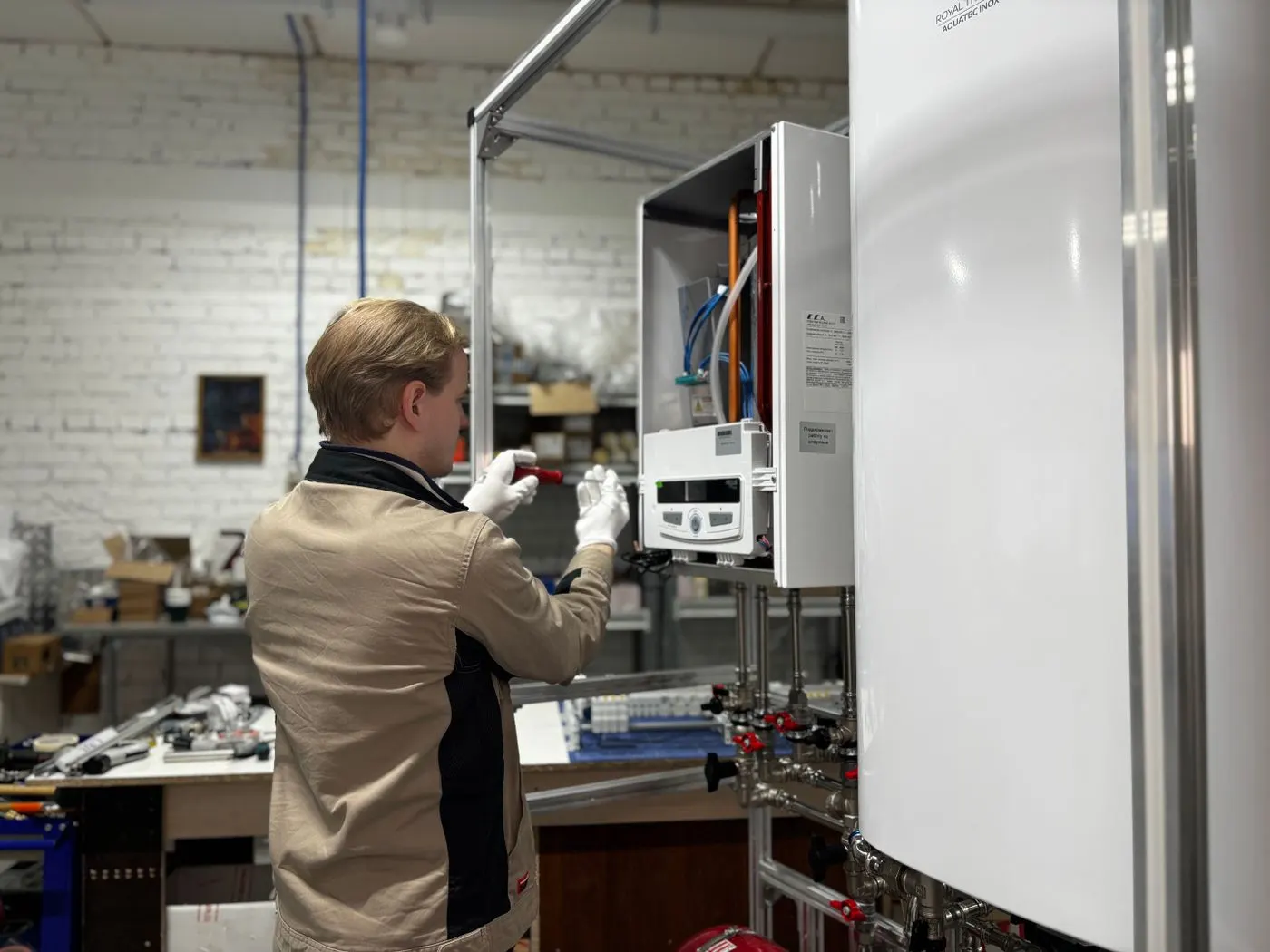
Quick answer: which furnace noises are serious?
Not every furnace noise is a problem. Some sounds are part of normal operation, while others are early warnings that a part is failing.
Stop and call now
Loud bang or boom at start-up, grinding or scraping metal, hissing with a gas smell, any noise while your CO alarm is sounding.
Book a repair soon
Squealing, screeching, loud humming or buzzing, repeated clicking with no heat, rumbling after the burners shut off.
Check yourself first
Whistling (often a dirty filter or closed vents), rattling panels, and gurgling from the drain line.
Usually normal
A soft whoosh when burners light, a short hum from the inducer before ignition, and ticking or popping in ducts as they warm and cool.
Safety first: if you smell gas, leave the house right away and call Enbridge Gas’s emergency line or 911 from outside. If your carbon monoxide alarm sounds, get everyone outside and call 911.
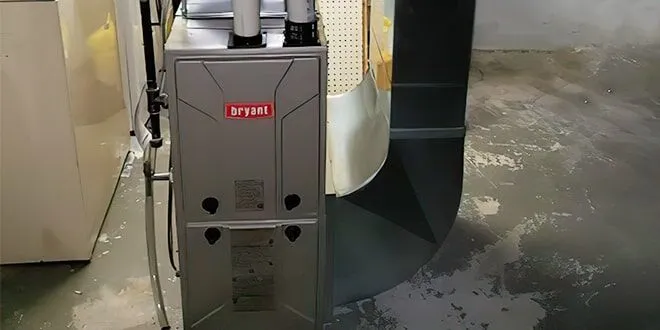
Furnace noise chart: cause, urgency and what to do
| Noise | Likely cause | Urgency | DIY or call? |
|---|---|---|---|
| Bang or boom when the furnace starts | Delayed ignition: gas builds up before lighting, often from dirty burners or a weak ignitor | High | Turn off and call |
| Squealing or screeching | Blower motor bearings, worn belt (older units) or inducer motor | Medium | Call |
| Grinding or scraping metal | Failing motor bearings or a loose blower wheel | High | Turn off and call |
| Repeated clicking, no heat | Ignitor, flame sensor, gas valve or pressure switch problem | Medium to high | Check thermostat and vents, then call |
| Rattling | Loose access panel, duct joint or screws; occasionally a failing inducer or cracked heat exchanger | Low to high | Tighten panels; call if it continues |
| Loud humming or buzzing | Failing capacitor, motor or transformer | Medium | Call |
| Whistling | Dirty filter, closed or blocked vents, or a duct leak | Low | DIY: replace filter, open vents |
| Rumbling after burners shut off | Gas continuing to burn, burner or gas valve issue | High | Turn off and call |
| Gurgling or bubbling | Condensate trap or drain partly blocked (high-efficiency furnaces) | Low to medium | Check the drain; call if it overflows or the furnace shuts down |
| Hissing | Air leak in ductwork, or a gas leak if you smell gas | Low, or emergency with gas smell | Gas smell: leave and call from outside |
| Popping or ticking in ducts | Metal ducts expanding and contracting | Low | Usually normal |
Banging, booming and rumbling
A loud bang right as the burners light is usually delayed ignition. Gas flows for a moment before it lights, then ignites all at once. Over time this can stress and crack the heat exchanger.
Dirty burners, a weak ignitor or incorrect gas pressure are the usual causes. Turn the furnace off at the thermostat and book a repair.
A rumble that continues after the burners should have shut off can mean gas is still burning. Treat it as urgent and call a technician.
A booming sound from the ducts when the blower starts is different. That is often the ductwork flexing because of high air pressure, from a dirty filter, closed vents or undersized returns.
Squealing, grinding and humming
A high-pitched squeal usually comes from the blower or inducer motor. On older furnaces with belt-driven blowers, it can also be a worn or loose belt.
Grinding or scraping metal is more serious. It usually means motor bearings are failing or the blower wheel has come loose and is hitting its housing. Shut the furnace off to prevent further damage.
A loud, steady hum or buzz often points to a failing capacitor or motor. A capacitor is a relatively simple repair if it is caught before it takes the motor with it.
Clicking with no heat: ignition and the pressure switch
A few clicks at the start of a cycle are normal. That is relays and the gas valve switching. Repeated clicking with no flame, or a furnace that lights and then shuts off, points to an ignition problem.
The usual suspects
Ignitor
A worn hot surface ignitor can no longer get hot enough to light the gas.
Flame sensor
If it is dirty, the furnace lights, can’t confirm the flame, and shuts the gas off within a few seconds.
Pressure switch
This safety switch confirms the inducer motor is clearing combustion gases from the heat exchanger. It senses the pressure difference the inducer creates. If the vent is blocked or the inducer is weak, the switch stays open and the furnace won’t light.
Check your vent pipes after snowstorms
In Ottawa, a common cause of pressure switch trips is snow. Heavy snowfall can bury the PVC exhaust and intake pipes on the side of your house.
During a heavy storm, clear the area around those pipes every couple of hours. If the furnace has already locked out, clearing the pipes and resetting the thermostat may bring it back.

Rattling: usually loose, sometimes serious
Most rattles are simple. A loose access panel, a duct joint or a screw vibrating in the cabinet can all rattle when the blower runs. Make sure the panels are seated properly; the furnace may not run if the door safety switch isn’t engaged.
A rattle that starts when the burners light and stops when they shut off is more concerning. It can be a failing inducer motor or, less often, a cracked heat exchanger.
A cracked heat exchanger can let carbon monoxide into your home’s air. If you hear that kind of rattle in an older furnace, have it inspected. Read more in our guide to furnace carbon monoxide safety.
What you can safely check yourself
Before calling, a few quick checks can solve simple problems or help the technician diagnose faster.
- Replace the filter if it is dirty. A clogged filter causes whistling, booming ducts and overheating.
- Open supply vents and clear furniture away from return grilles.
- Make sure the furnace panels are closed and seated.
- Check the thermostat setting and replace its batteries if it uses them.
- Look at the outdoor exhaust and intake pipes for snow, ice or debris.
- Check the condensate drain line for kinks or standing water.
Leave everything inside the burner compartment, the gas valve and the electrical controls to a licensed gas technician. If your furnace has stopped completely, see what to do if your furnace stops working on a cold day.
How noises relate to furnace age
New noises in a furnace older than 15 years are often a sign of parts wearing out. A single motor repair may make sense, but a string of them usually means it is time to price a replacement.
Our guide on how long a furnace lasts explains how to weigh repair against replacement.
Get the noise diagnosed
A noise caught early is usually a smaller repair. Oria offers 24/7 emergency service in Ottawa, and our technicians are licensed gas fitters who repair all makes and models.
Phil G. described a recent visit: “Mansoor was incredibly fast to respond, offered help over the phone and came over the following morning. He’s a total pro, diagnosed the problem within a few minutes…”
Book through our furnace repair service, or call (613) 866-1869. For urgent problems, see our 24/7 emergency HVAC service.
Frequently Asked Questions
Why does my furnace bang when it turns on?
A bang when the furnace starts is usually delayed ignition. Gas flows into the burners for a moment before it lights, then ignites all at once. Common causes are dirty burners, a weak ignitor or incorrect gas pressure. It can stress and eventually crack the heat exchanger, so turn the furnace off and book a technician rather than letting it continue.
Is it normal for a furnace to make noise?
Some noise is normal. You will usually hear the inducer motor hum for a few seconds, a soft whoosh as the burners light, and the blower starting a short time later. Ducts may tick or pop as they warm and cool. Banging, grinding, screeching, loud humming or rumbling after shutdown are not normal and should be checked by a technician.
Why is my furnace clicking but not turning on?
Repeated clicking without heat usually points to the ignition system or a safety switch. A worn ignitor, a dirty flame sensor or a pressure switch that won’t close are common causes. In Ottawa, check the outdoor exhaust and intake pipes first, because snow blocking them can trip the pressure switch. If they are clear and the clicking continues, call a technician.
What does a squealing furnace mean?
A squeal or screech usually comes from the blower motor or inducer motor, often from worn bearings. On older furnaces with belt-driven blowers, a worn or loose belt is another cause. The furnace may keep running for a while, but the motor can fail completely, often on a cold night. Book a repair soon rather than waiting.
Can a noisy furnace be dangerous?
Some noises can be. Delayed ignition bangs, rumbling after the burners shut off, or rattling that starts with the flame can be linked to burner problems or a cracked heat exchanger, which can release carbon monoxide. Hissing with a gas smell is an emergency: leave the house and call from outside. Keep working CO alarms near sleeping areas.
Why does my furnace whistle?
Whistling usually means air is being forced through a small opening. The most common cause is a dirty filter, followed by closed or blocked vents and gaps in ductwork. Replace the filter, open the supply vents and clear return grilles. If the whistling continues, the ducts may be undersized or leaking, which a technician can check during a service visit.
Related Reading
Need help with your heating or cooling?
Family-owned, licensed HVAC contractor serving Ottawa and Gatineau since 2005. 5.0 stars from 396 Google reviews.