

Quick answer: what to do right now
- 1
Shut the AC off at the thermostat
If the shaking is heavy, or you hear banging, grinding or metal hitting metal.
- 2
Find the source
Stand beside the outdoor unit, then by the furnace. Is it outside, inside, or travelling along the copper lines?
- 3
Kill the power
At the outdoor disconnect box before touching the unit.
- 4
Clear debris
From the top fan guard and tighten loose panel screws.
- 5
Check the pad
With a level. A visible tilt after winter is a common cause.
- 6
Call a technician
If the noise continues, the fan wobbles or the noise starts at the compressor.
This guide covers noise and vibration. If your AC is also not cooling, start with our AC not cooling troubleshooting guide.
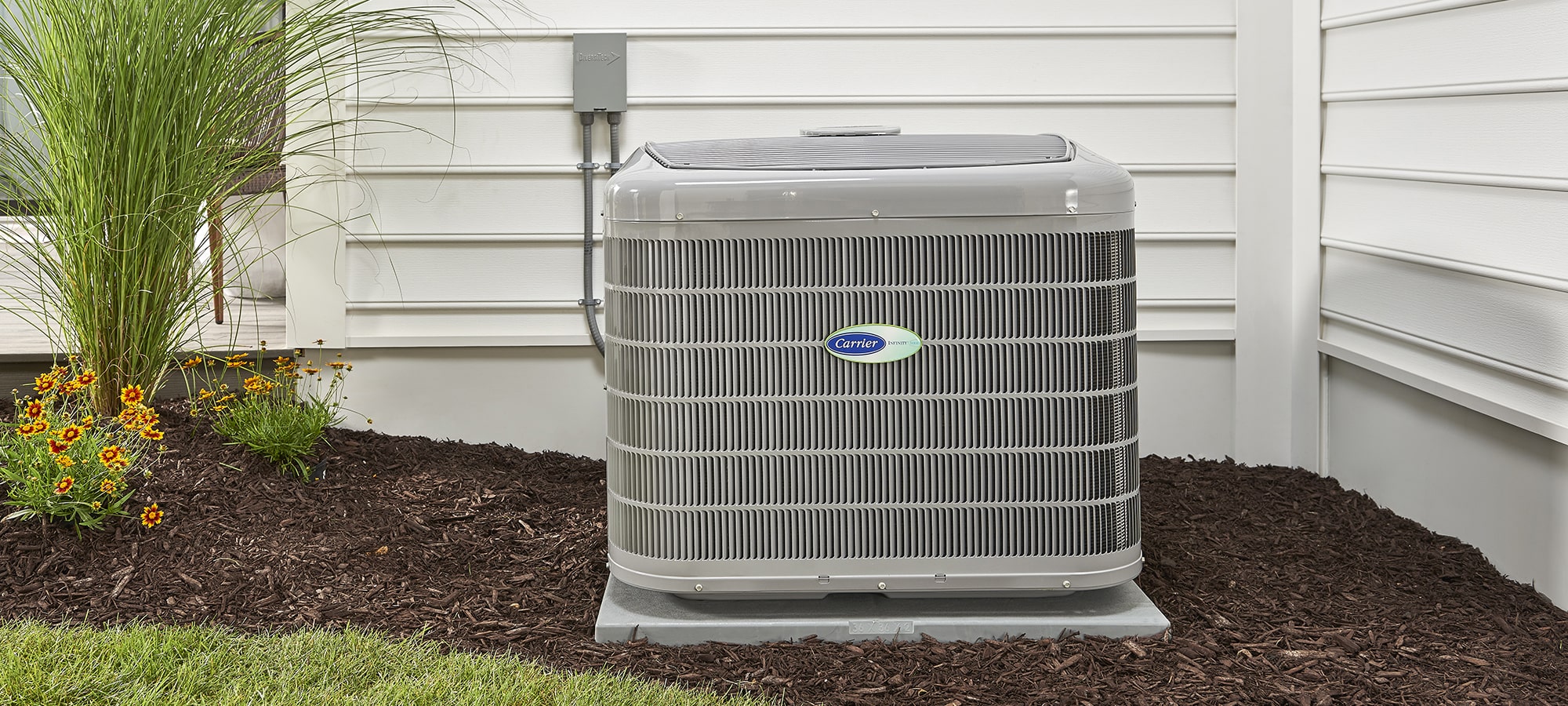
Normal sounds vs. warning signs
A central air conditioner is never silent. A steady hum from the compressor, the whoosh of the fan and a soft click when the contactor pulls in at start-up are all normal. A newer unit may also give a short shudder as the compressor starts and stops.
Things that are not normal:
- Shaking you can feel through the pad, the wall or the copper lines
- Rattling or ticking that changes with fan speed
- A loud clunk or bang on start-up or shut-down
- Grinding, squealing or screeching
- A loud buzz with no fan movement
Outdoor unit: the most common causes
Debris in the fan
After a summer storm, twigs, maple keys and kids’ toys fall through the top grille and hit the blades. You’ll hear a rhythmic ticking or slapping. With the power off at the disconnect, lift out what you can reach with gloves. Don’t reach past the guard into the fan.
Loose panels, screws and fan guard
Access panels and the top guard loosen as the unit vibrates through each season. A tinny rattle that stops when you press on a panel is the giveaway. Tightening the screws is a safe DIY fix once the power is off.
Fan blade or fan motor
A blade bent by hail or debris throws the fan out of balance, and the whole cabinet wobbles. Worn motor bearings cause a growl or squeal and a blade that wobbles when spun by hand. A wobbling fan can crack the motor mount or hit the guard, so stop using the AC until it is fixed. A condenser fan motor typically costs $450 – $900 to replace.
Compressor
The compressor is the heavy unit in the middle of the cabinet. It sits on rubber grommets or springs that wear out and let it shake. A loud clunk at start-up, or a compressor that struggles, hums and trips the breaker, often means a weak capacitor or a compressor near the end of its life. Have it checked before running it more.
Refrigerant lines touching the house
The copper lines carry compressor vibration into anything they touch. A buzz or hum heard inside a wall or through a basement joist usually means the line set is resting on siding, a joist or ductwork. A technician can re-route or isolate the lines. Don’t bend them yourself; a kinked line can cause a refrigerant leak.
Wall brackets and mounting
Heat pumps and mini-split outdoor units mounted on wall brackets need rubber isolation pads. When those pads perish or the bracket bolts loosen, vibration travels straight into the wall and the room behind it.
Pads that settle after Ottawa frost heave
Ottawa’s freeze-thaw cycles move the soil under AC pads every winter. Concrete slabs crack and tilt, and plastic pads sink on one side, especially where downspouts dump water beside the unit.
A slight lean is harmless. A noticeable tilt is not: the compressor runs off-level, the fan wobbles, the cabinet rattles and the copper lines get pulled tight against the wall.
Check each spring
Put a level across the top of the unit, or use a phone level app.
Look at the lines
They should not be stretched taut or kinked where they enter the house.
Fix the cause
Extend downspouts and grade soil away from the pad so it settles less next winter.
Re-levelling usually means disconnecting power, lifting the unit, packing compacted gravel or setting a new pad, and checking the lines. It is a modest job within the typical AC repair range, and far cheaper than a strained line or a damaged compressor.
Indoor causes: furnace, blower and ducts
Sometimes the vibration is inside, because central AC uses the furnace blower to move the cold air.
Dirty or unbalanced blower wheel
Dust caked on the blades throws the wheel out of balance. The furnace cabinet hums or shakes whenever the fan runs. Cleaning or replacing the wheel is a technician job.
Blower motor mounts
Worn rubber mounts let the motor knock against the housing.
Loose furnace panels
The blower door rattling in its slot. Make sure it is seated firmly.
Ducts popping or booming
Sheet-metal ducts flex when the blower starts and stops. Often harmless, but louder than usual can point to a restriction such as a clogged filter.
Condensate pump
A rattling or buzzing pump may be failing. If it stops, water can back up and shut the AC off.
Rattling registers
Loose vent covers buzz when airflow is high. Tighten or replace them.
Our guide to furnace noises and what they mean covers blower sounds in more detail.

How urgent is it? AC vibration and noise guide
| What you notice | Likely cause | Urgency |
|---|---|---|
| Banging or clanking from the outdoor unit | Loose compressor part, broken mount, fan hitting guard | Shut off now, call |
| Grinding or screeching | Fan motor or blower motor bearings failing | Shut off now, call |
| Loud buzz, fan not spinning | Failed capacitor or seized motor | Shut off now, call |
| Whole cabinet wobbling | Bent blade, unbalanced fan, tilted pad | Stop using, book soon |
| Hum or buzz heard inside a wall | Refrigerant lines touching the house | Book soon |
| Clunk on start-up only | Worn compressor mounts, hard start | Book soon |
| Ticking or slapping | Debris in the fan | DIY with power off |
| Tinny rattle that stops when you press a panel | Loose panel or screws | DIY with power off |
| Furnace cabinet shaking when fan runs | Dirty or unbalanced blower wheel | Book soon |
| Rattling vent cover | Loose register | DIY |
If you hear hissing or bubbling as well, that points to a refrigerant leak, which needs a licensed technician.
What AC vibration repairs cost in Ottawa
Most vibration fixes fall within the typical AC repair range of $150 – $1,200 in Ottawa.
| Repair | Typical cost |
|---|---|
| Run or start capacitor | $150 – $400 |
| Contactor | $150 – $400 |
| Condenser fan motor | $450 – $900 |
| Furnace blower issue affecting AC | $300 – $1,200 |
| Re-levelling a pad, securing lines, tightening panels | Within the $150 – $1,200 repair range |
| Compressor replacement | $1,800 – $3,500 |
| Central AC replacement | $4,000 – $8,000 |
The final price depends on the home, the equipment and access. If a compressor fails on a system over about 12 years old, or one using phased-out R-22, replacement is usually the better spend. See our AC repair cost guide and repair-or-replace guide. Oria gives free quotes on any equipment purchase.
How to prevent AC vibration
Book a spring tune-up ($120 – $200)
The technician tightens electrical and panel connections, checks the fan and motor, tests the capacitor and looks at the pad and lines.
Keep the top clear
Trim overhanging branches so debris doesn’t fall into the fan.
Manage water
Point downspouts away from the pad to reduce frost heave.
Change the furnace filter
So the blower doesn’t strain.
If your AC is shaking or rattling, call Oria at (613) 866-1869 or book air conditioning repair in Ottawa. Our technicians repair all makes and models, and same-day service is often available.
Frequently Asked Questions
Is it dangerous if my AC is vibrating?
Heavy vibration isn’t usually a safety hazard to people, but it can quickly damage the AC. A wobbling fan can break its mount, loose parts can hit the coil, and shaking lines can crack and leak refrigerant. If the vibration is strong, or you hear banging or grinding, turn the AC off at the thermostat and have it checked.
Why does my AC make a loud clunk when it turns on or off?
A single clunk at start-up or shut-down usually comes from the compressor shifting on worn rubber mounts or springs, or from a compressor that is struggling to start. A weak capacitor can make starting harder. It doesn’t always mean failure, but it is worth booking a technician before the compressor, the most expensive part, takes more strain.
Can I fix a rattling AC myself?
Some causes, yes. With power off at the outdoor disconnect, you can remove debris from the fan guard, tighten loose panel screws, secure a rattling vent cover and check the pad with a level. Leave fan motors, blades, compressors, capacitors and refrigerant lines to a licensed technician, as they involve high voltage and refrigerant.
Why is my AC pad sinking?
In Ottawa, frost heave and water are the usual culprits. Soil under the pad freezes, expands and thaws each winter, and water from downspouts softens it further. Over a few years the pad tilts or sinks on one side. A slight lean is fine, but a noticeable tilt can strain the copper lines and the compressor, so have it re-levelled.
Why can I hear my AC vibrating inside the wall?
That hum usually travels through the copper refrigerant lines. Where they pass through the wall or run along a basement joist, any direct contact carries compressor vibration into the house. A technician can add isolation, re-strap the lines or adjust where they touch. Avoid bending the lines yourself, because a kink can cause a leak.
Does a vibrating AC mean the compressor is failing?
Not always. Most vibration comes from simpler things: debris, loose panels, a bent fan blade, worn fan motor bearings or a tilted pad. Compressor trouble is more likely if the shaking starts in the middle of the unit, comes with a loud clunk or hum, or the breaker trips. A technician can test it to be sure.
Related Reading
Need help with your heating or cooling?
Family-owned, licensed HVAC contractor serving Ottawa and Gatineau since 2014. 5.0 stars from 578 Google reviews.